As an Amazon Associate, we earn from qualifying purchases. Some links on this site are affiliate links at no extra cost to you. Our recommendations are based on thorough research and editorial judgment.

How Altitude and Climate Affect Car Interior Temperatures

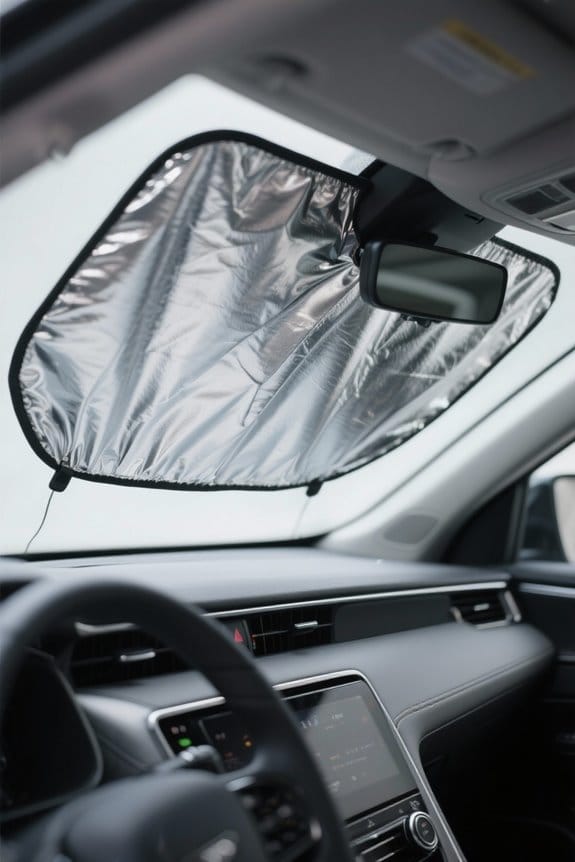
At higher altitude, cabins run cooler by about 3.5°F per 1,000 feet, yet UV climbs 20–25% and bakes leather faster. Sunlight through glass creates a greenhouse effect that can push interiors to 110–170°F in 20–30 minutes. Humid valleys feel hotter; deserts can hit 160°F. Use a $10–$25 reflective sunshade, ceramic film or 35–50% tint, and a $12 leather conditioner. Want practical tips for protection and prep?
Key Takeaways
- Higher altitude generally lowers air temperature (~3.5°F per 1,000 ft) but increases solar and UV intensity, raising interior heat and material degradation.
- Thinner air at altitude reduces convective cooling, making engines and cabins more prone to overheating during long ascents.
- Hot, humid climates trap heat and reduce evaporative cooling, causing cabins to heat faster and feel hotter than dry conditions.
- Direct sunlight through windshields creates a greenhouse effect that can push cabin temperatures above 100°F within 20–30 minutes.
- Mitigation—reflective sunshades, ceramic films, window tint, and UV protectants—reduces heat gain and prevents interior material damage.
How Sunlight and the Greenhouse Effect Heat Vehicle Cabins
You may be interested


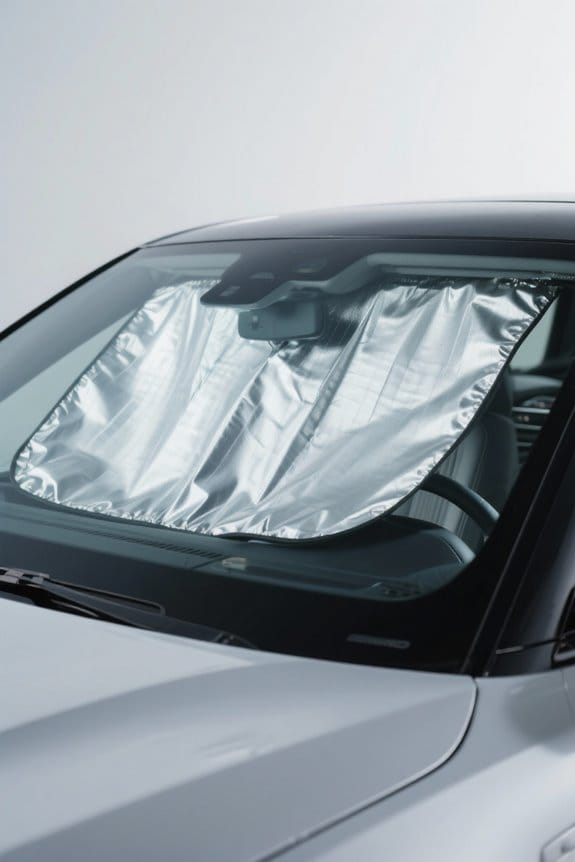
When sunlight pours through a windshield, the cabin quickly becomes an oven. Readers learn that a parked car can heat rapidly via a greenhouse effect. Interior temperatures may top 100°F within 20 minutes. Dark dashboards and seats can reach 180°F to over 200°F — like touching a frying pan. Expect a roughly 34°F rise in 30 minutes on moderate days. Cracking windows helps little; temperatures still climb about 3.1°F every five minutes. A $20 reflective sunshade can cut cabin heat by up to 15°F, says one tester, “like opening a small fridge.” What should you do? Think ahead: shade, sunshades, or timing trips. These simple steps protect people and pets from dangerous, fast-building heat. Custom-fit sunshades with 99% UV blocking can further reduce interior damage and heat buildup.
How Elevation Changes Air Temperature and UV Exposure

A parked car on a mountain road behaves differently than one in a valley. Readers learn that air temperature drops about 3.5°F per 1,000 feet. That matters for how quickly interiors warm or cool. Thin air at 8,000 feet lets more sunlight through. UV levels climb noticeably; a handheld UV meter runs $50–$150 and will show the jump. Direct sun can drive interior temps up despite cool ambient air. Leather may dry; fabric can fade. Imagine sunscreen for your dashboard. One tester joked, “My seats aged like toast.” Practical steps cost little: UV shades ($15–$40), window tints ($150+), or covered parking. Who wants cracked leather? Measure, protect, and remember elevation changes both air temperature and sunlight exposure. Consider investing in custom-fit shades for better UV blocking and cabin cooling.
Why Interior Materials Degrade Faster at High Altitude
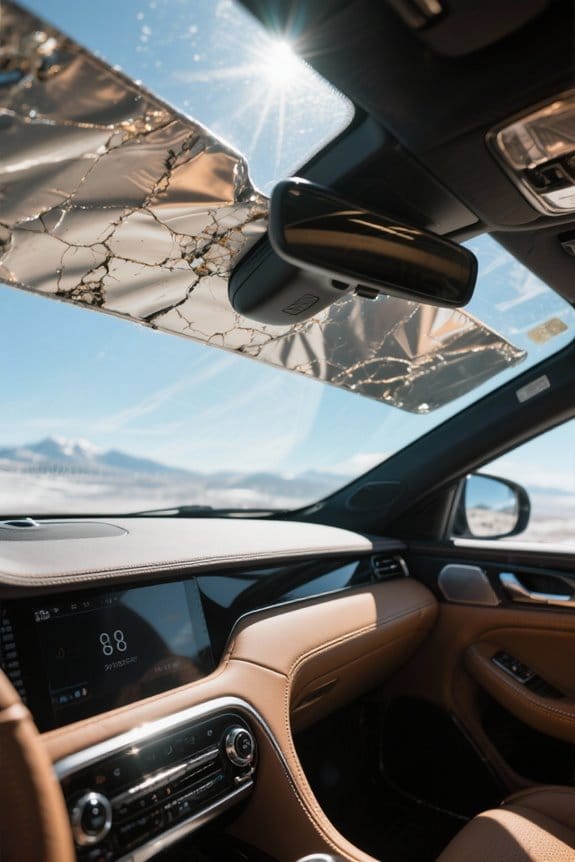
Because thinner air at elevation lets more UV through, car interiors age faster than you might expect. Sunlight at 8,000 feet can be 20–25% stronger than at sea level, so leather dries and cracks sooner. Vinyl dashboards fade in months, not years. Lower oxygen and high UV promote warping; expect color loss and slight shrinking. Temperature swings—hot sun to cool nights—make materials expand and contract, causing seams to split. Typical low humidity strips oils from leather; a $25 conditioner helps, but reapplication is monthly in dry alpine conditions. Interior plastics become brittle; a $10 UV shield reduces damage but won’t stop it entirely. Want longevity? Park in shade, use protectants, and inspect seams regularly. Who likes surprises in their glovebox? Using a custom-fit sunshade improves thermal performance and blocks UV to further protect interiors.
Recommended Products

Approx. external dimensions: 19.2x10.2x6.8 Ft; approx. internal dimensions: 18.3x8.5x5.9 Ft

Note: The canopy of the carport is covered with a transparent protective film. You can decide whether to remove it or not. Please wear the gloves provided when removing it. The car port cannot withstand heavy snow. In extreme weather, please do not stand or place any items in the carport.

【Note】The canopy of the carport is covered with a transparent protective film. You can decide whether to remove it or not. Please wear the gloves provided when removing it. The car port cannot withstand heavy snow. In extreme weather, please do not stand or place any items in the carport.
Humidity, Climate Zones, and Their Effects on Cabin Heat
Humidity-laden air can turn a parked car into a sauna in minutes. Readers learn that humidity makes interiors feel hotter than thermometers show. In humid zones, cabins can exceed 100°F within 20 minutes on moderate days. In deserts, temperatures still spike past 160°F to 170°F rapidly. High humidity slows evaporative cooling, so even cracked windows don’t help much. Materials suffer; leather warps and vinyl fades faster under combined heat and moisture. Consider a $25 sunshade or $120 ceramic window film to reduce heat gain. Tester Ava jokes, “It’s like sitting inside a warm loaf of bread.” Want numbers? Expect faster degradation and longer cooling times in humid climates. Practical steps and cheap products can lessen damage. Using a well-fitted custom sun shade can significantly improve interior protection and cooling.
Rapid Temperature Rise: How Quickly Cars Become Dangerous
How fast does a parked car turn into an oven? In about 20 minutes, interiors can top 100°F. On a mild 75°F day, temperatures climb 34°F in 30 minutes. One hour in direct sun can reach 123°F. Dark surfaces get even hotter — over 200°F — like frying pans waiting for breakfast.
This matters. A child or pet left inside feels the rise quickly. The biggest spike happens in the first 20 minutes. Tester quotes say it feels like an instant sauna. What can you do? Don’t assume cracked windows help; they barely slow the rise. Practical gear, like a $30 portable fan or a $25 sunshade, gives modest relief. The point is urgent: avoid leaving anyone in a parked vehicle. Many drivers also use windshield sun shades specifically designed for models like the Cadillac XT6 to reduce interior temperatures and block UV.
Common Myths: Cracked Windows, Tinted Glass, and Sunshades
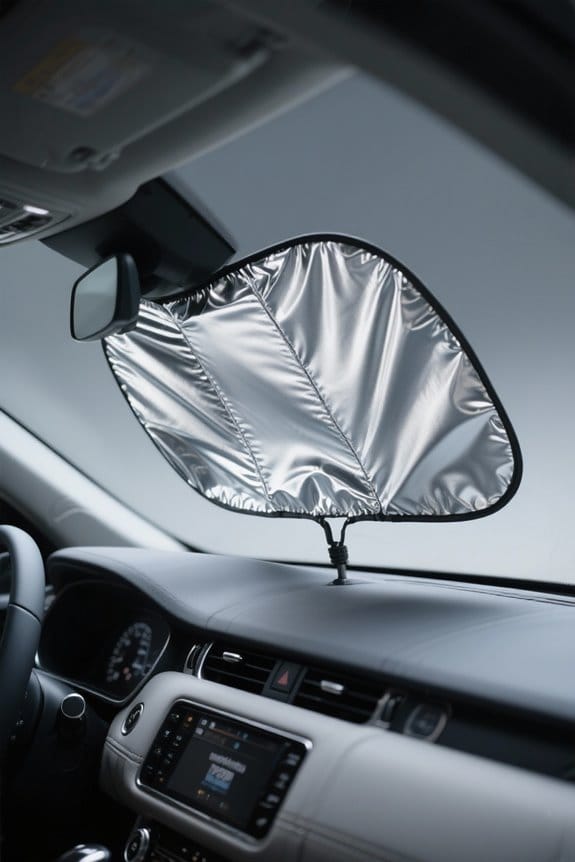
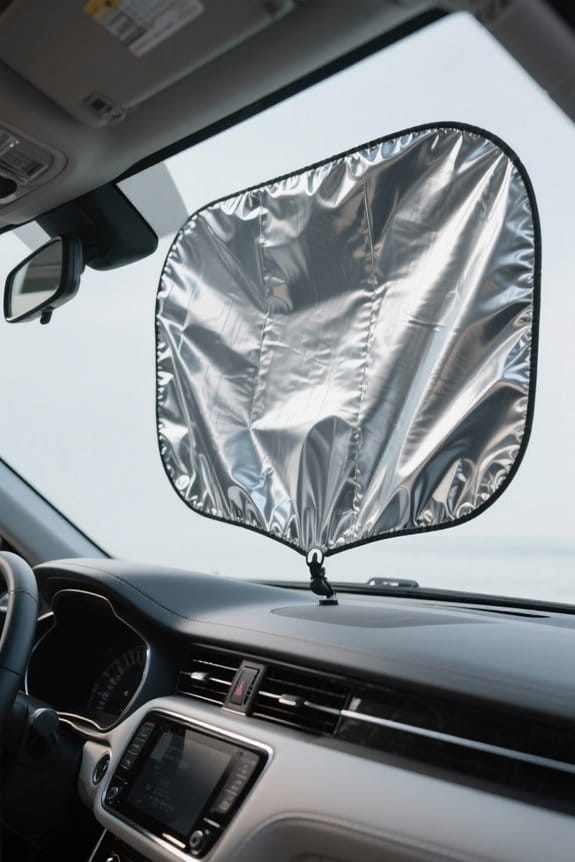
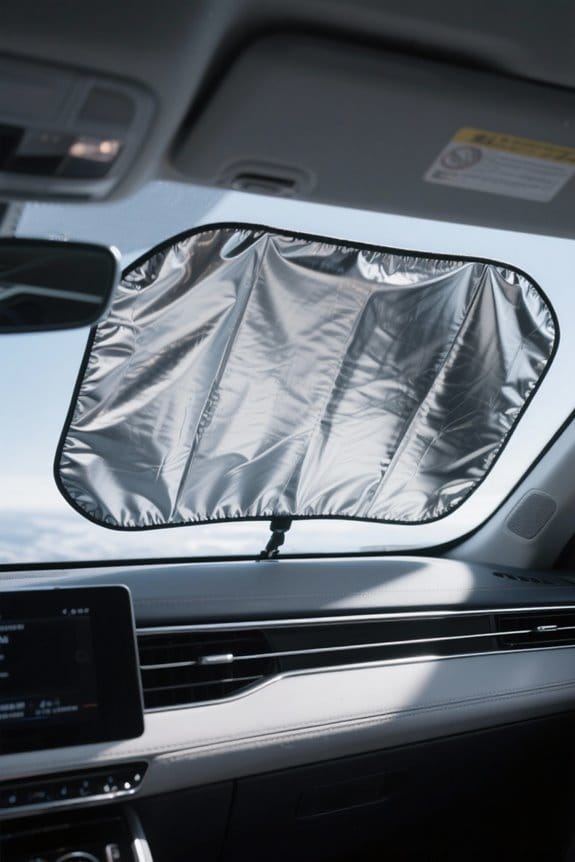
The rapid heat spike described above raises a lot of questions about quick fixes people try. Many believe cracked windows will help. Studies show cracking the windows gives only about a 3.1°F drop every five minutes — negligible for a parked car baking in sun. Tinted glass can cut UV and lower temps, but effectiveness depends on tint percentage and local laws; a 35% tint might help more than 50% in some places. Sunshades often work best. Foil sunshades can shave up to 15°F by reflecting sunlight back. A basic $10 sunshade often outperforms a cracked window. Want a clear rule? Use a sunshade and follow tint rules. Tester quips: “Cracks are for wind, not cooling.” Custom-fit sunshades reduce interior temperatures more effectively than generic models.
Recommended Products

FAST MAGNETIC INSTALLATION FROM THE GROUND: Magne Shade uses a patented magnetic mounting system that allows quick installation and removal from the ground after the initial magnet setup. No ladders, suction cups, snaps, drilling, or permanent modifications required. Telescoping installation rod included.

RV sun shade for windshield: ShadePro's ShadeMaster windshield covers are made with premium heavy duty solar screen. The mesh blocks up to 94% of harmful UV rays and reduces interior heat gain by up to 25%.

IMPORTANT INFORMATION The second image is a template of what you will receive. If unsure or if it looks wrong please initially contact us.
How Heat Impacts Electronics, Upholstery, and Safety Components
Imagine a phone baking on a dash like a tiny oven. Heat impacts electronics,upholstery,and safety components in clear ways. Circuit boards can fail above 85°C (185°F). A $200 dash cam may stop recording after repeated heat spikes. Leather seats fade and crack; fabric warps and smells musty. UV exposure bleaches dyes in weeks, not years. Airbag materials weaken when stored near 70–80°C, reducing crash performance. Batteries left in glove boxes can swell or leak; some alkaline cells burst under extreme heat. Tester reports call this “slow sabotage.” What should a driver notice? Uneven stitching, weird beeps, or a dashboard that feels like a stovetop. These signs mean components are aging faster and repairs — often hundreds of dollars — may follow. Using a quality sunshade can cut interior temperatures substantially and help protect materials like windshield sun shades from UV and heat damage.
Recommended Products

Heavy Duty Frame Tent Construction – Single piece red and white striped canopy made from lightweight 14 oz translucent PVC vinyl with 1 inch heat sealed overlap seams supported by a galvanized steel frame and interchangeable fittings for strength and stability

【𝗦𝗨𝗣𝗘𝗥 𝗛𝗘𝗔𝗩𝗬 𝗗𝗨𝗧𝗬 𝗡𝗘𝗪 𝗣𝗔𝗧𝗘𝗡𝗧 𝗗𝗘𝗦𝗜𝗚𝗡】: Made of 260 GSM permeable extra heavy duty fabric, heavy duty stainless mounting rings, cable wires built-in edges, integrate into the mounting rings, all pulling strength goes to the cable wires, not only making the edges more durable, it also enhence the appearance of shade sail.

Easy do-it-yourself awning kit perfect for doorways, entrance areas and windows
Practical Steps to Protect Your Car and Passengers From Heat
A few simple moves can keep a car from turning into a convection oven. Park in shade or a garage; shaded spots often keep the car interior more than 15°F cooler. Use a sunshade (about $10–$30) to shave up to 15 degrees off cabin temps. Window tinting reduces heat and UV; expect $100–$400 depending on vehicle size. Check cooling systems regularly — hoses, coolant level, thermostat — especially at high altitude where thin air raises risk. Seat covers and conditioner for leather or fabric prevent cracking and keep surfaces tolerable. Tester quote: “Feels like a different car,” said one commuter, smiling and wiping sweat. Who likes baking in traffic? Small investments and simple habits protect passengers and preserve interiors. Choosing a custom-fit shade made from premium reflective materials can further lower interior temperatures and block UV.
Recommended Products

▶【All-Season Protection for Your Vehicle】Crafted from top-quality PU silver-coated material, our car tent provides unparalleled protection for your vehicle in all weather conditions. In scorching summer temperatures, It effectively lowers the temperature inside the car to 30℃ (86℉), keeping you cool and comfortable. And in spring and autumn, it protects against rain, bird droppings, dust, and leaves.

ZenEclipse Brand: Made in the USA with US Sourced materials by a Veteran owned and operated manufacturing company!

ZenEclipse Brand: Made in the USA with US Sourced materials by a Veteran owned and operated manufacturing company!
Preparing Vehicles for Seasonal and High-Altitude Driving
Because mountain air is thin and summer sun is brutal, drivers should prep cars for steep climbs and scorching parking lots. Mechanics recommend checking coolant levels and hoses; a cooling flush at $120–$180 can prevent overheating on long ascents. Pack a 1.5‑liter spare coolant bottle for emergencies. Sunshades ($10–$25) and 35–50% tint reduce radiant heat quickly. Leather conditioner ($12 jar) and UV fabric spray protect cars interior from cracking and fading. Use covered parking or a full car cover ($40+) when possible; even partial shade lowers cabin temperature by 10–15°F. Who wants a frying‑pan dashboard? Regular maintenance, clear belts, and fan checks keep systems efficient at altitude. A tester quips, “Better safe than stranded on a ridge.” Additionally, using premium reflective sun visors can block up to 99% of harmful UV rays and cut interior temperatures dramatically, making them an effective investment for high-heat conditions like mountain parking lots (heat protection).
Recommended Products

High Splicing Efficiency: Our fiber fusion splicer features 4 high-precision motors and clad alignment, enabling rapid splicing in just 6s and quick heating in 13s, with a fusion loss as low as 0.01 dB (MM). It features a 3-in-1 fiber holder, compatible with SM, MM, DS, NZDS, UI, BUI, and EDF fibers.

PowerCore cool air intake kit

Simplicity: Brake kit comes packed with (8) high performance brake rotors and (8) semi-metallic brake pads.
Frequently Asked Questions
Do Cars Run Hotter at Higher Elevation?
Yes, cars often run hotter at higher elevation. Observers note Temperature Variations due to thinner air reducing engine power and cooling efficiency, increasing engine workload and heat, especially during prolonged climbs or heavy braking on descents.
How Hot Do Car Interiors Get in Summer?
Like a trapped oven, a car becomes a furnace: interiors routinely exceed 100°F within minutes, reach about 109°F in 20 minutes and 123°F an hour later, with interior heat sometimes scorching surfaces above 180°F.
Does High Altitude Affect Your Car?
Yes. Altitude Impact reduces engine power and increases fuel use, stresses cooling systems, and raises overheating risk; brakes can overheat on long descents, and combined altitude and heat can intensify interior temperatures, affecting comfort and safety.
Do Cars Need to Be Adjusted for High Altitude?
Yes — older and naturally aspirated vehicles often need altitude adjustments. Engines may require re-jetting or tuning, while cooling and fuel systems demand checks; failing to prepare can quietly turn climbs into costly, performance-draining surprises.