As an Amazon Associate, we earn from qualifying purchases. Some links on this site are affiliate links at no extra cost to you. Our recommendations are based on thorough research and editorial judgment.

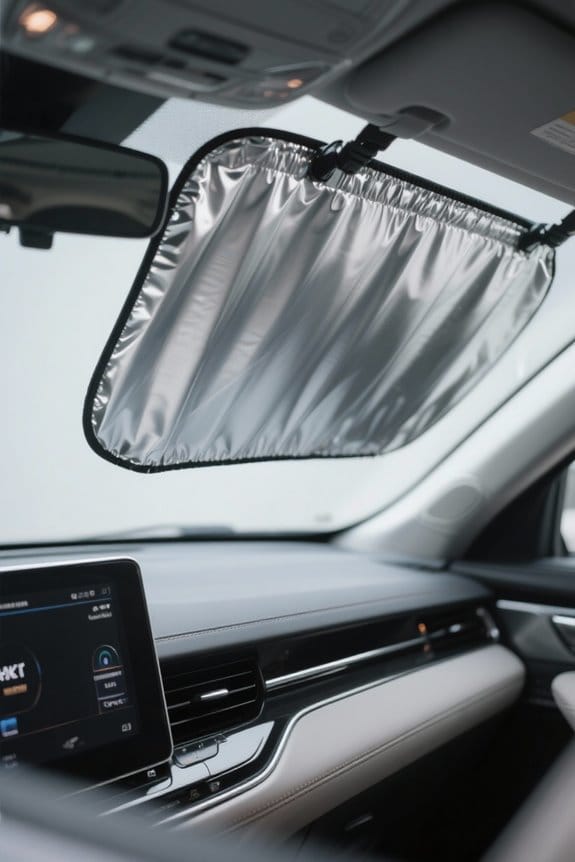
Do Sun Shades Keep Cars Cooler at Night?

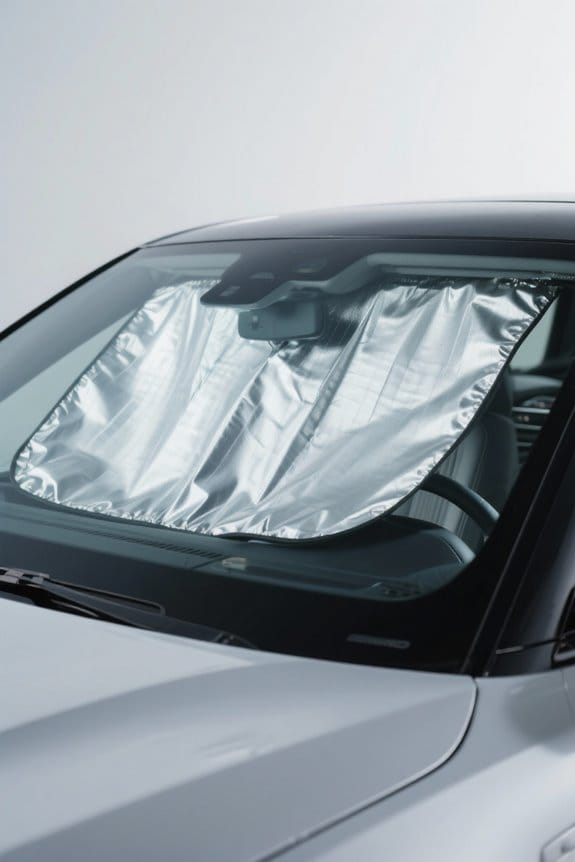
Sun shades don’t keep a car cool all night, but they do help. Reflective silver shades (about $10–$25) cut daytime dash heat by 20–30°F and can slow overnight cooling by roughly 3–6°F with padded or R‑1 polyester‑mylar models near $30–$40. A snug, foam‑backed fit traps a thin air pocket like a blanket. Want less frost and quicker morning comfort? Keep one in place and learn when it truly pays off.
Key Takeaways
- Reflective sun shades reduce overnight heat loss modestly, typically keeping interiors 3–6°F (1.5–3°C) warmer.
- Insulated or foam-backed shades perform better overnight than thin mylar panels by trapping an air pocket.
- Snug-fitting shades seal gaps and retain heat more effectively than loose or ill-fitting covers.
- Nighttime gains are small compared with daytime cooling benefits; shades mainly prevent daytime solar heating.
- In cool weather, shades can limit frost on windows and slightly speed morning warm-up.
How Sun Shades Work After Dark

You may be interested


Think of a sun shade as a daytime bodyguard that mostly clocks out after sunset. Readers learn that shades reduce heat best with direct sun, not under moonlight. A typical silver foldable shade ($10–$25) blocks solar gain and keeps dash temps 20–30°F lower on hot afternoons. At night, absence of radiation makes that job moot. Still, a snug shade can slow night cooling by a few degrees, like a thin blanket over glass. Measurements show interior temps equalize with outside air within one to two hours without strong insulation. Want subtle benefit? Try a $30 padded shade; it offers modest thermal buffering. Tester Mark said, “It’s comforting, not magical.” Many jumbo shades made from reflective 240T polyester also excel during daytime use.
Reflective Materials and Nighttime Insulation
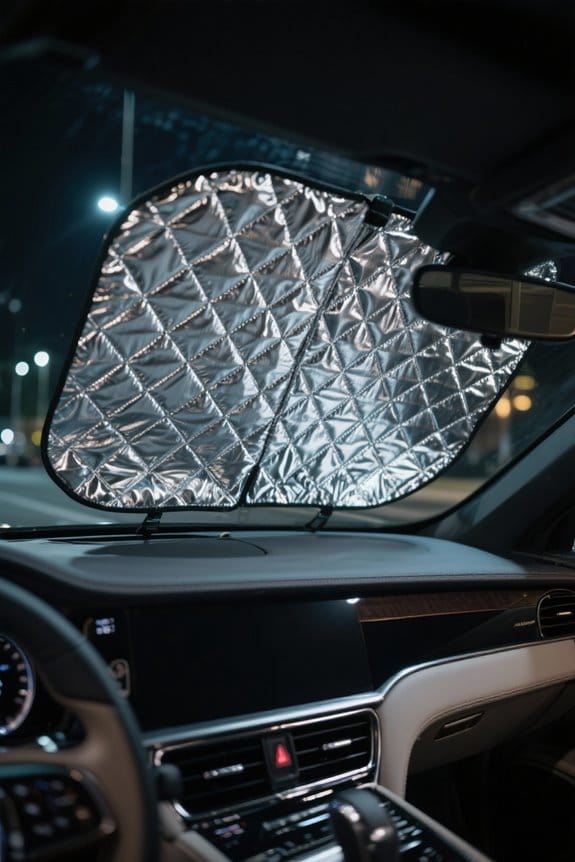
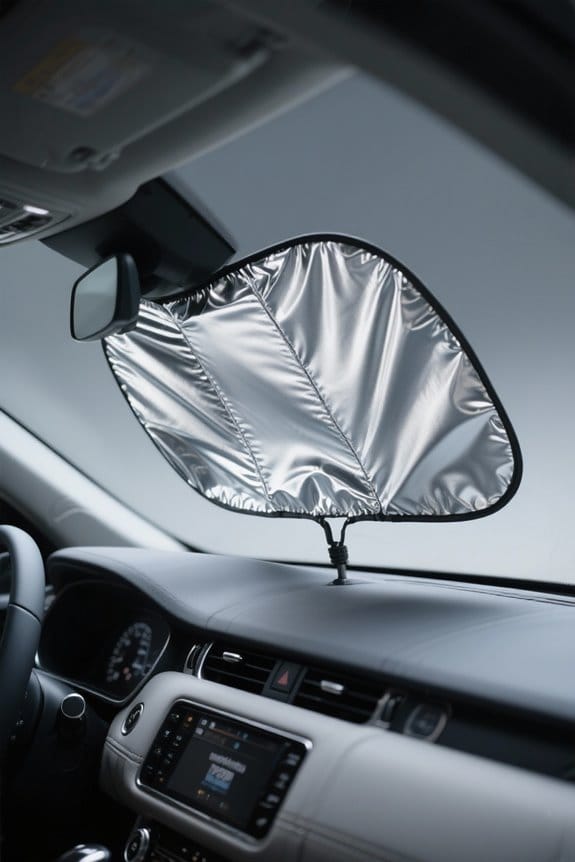
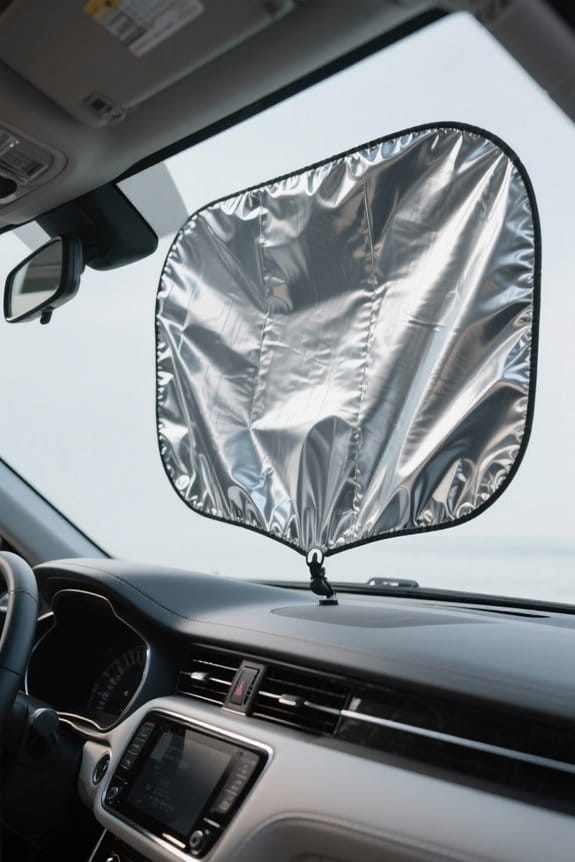
After dark, reflective shades change jobs from sun shields to light blankets. They no longer fend off sunlight, but some reflective materials still act like thin thermoses. A polyester-mylar combo rated R-1 can cut heat loss modestly overnight. Think of a $15 windshield reflector trapping residual warmth like a cozy foil hat. Tests show insulated models reduce temperature drop by 2–6°C (3.5–11°F) in calm conditions. Placement matters: a snug fit seals better than a loose flap. High-end multi-layer options (near $40) perform best, reflecting interior infrared as well as visible light. Want proof? A tester joked, “It’s not magic, just common-sense physics.” So, yes, some shades help retain warmth, but their chief job remains daytime protection. Many custom-fit designs for specific vehicles, such as the Acura TLX, provide better sealing and maximum coverage that improves overnight insulation.
Comparing Interior Temperatures: Day Vs Night

Although sun shades shine at blocking daytime heat, their nighttime role is much smaller. Tests show parked cars without shades reached about 120°F in daytime sun. At night, temperatures drop and both shaded and unshaded cabins fall into similar ranges—often within a few degrees. So sun shades help mostly by stopping daytime peaks, not by keeping your car cool overnight. Imagine a frying pan cooling on the porch; shade can’t change the evening breeze. A $15 reflective shade or a $30 accordion model reduces daytime peaks noticeably. Overnight, exterior air and surface heat loss dominate. Want measurable benefits? Buy a quality shade for daytime use. Want overnight performance? Rely on night air and parking choices instead. High-quality materials like UV blocking reflective polyester and ABS components improve daytime effectiveness and durability.
Do Sun Shades Trap Heat Overnight?
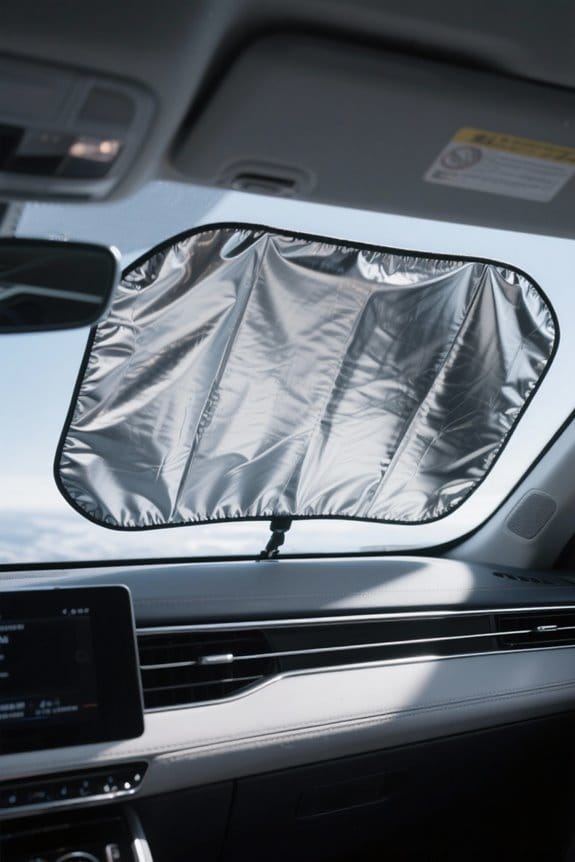
When nights turn cool, a parked car can shed heat quickly — but leaving a reflective sun shade in place can slow that process. Tests show sun shades really keep residual heat from escaping when left inside. A reflective, aluminized shade creates a small air pocket against the glass. That pocket acts like a mini greenhouse, holding several degrees above ambient. One tester noted a 3–6°F difference at 2am with a $15 foldable shade. Materials matter: thicker foam-backed shades trap more heat than thin mylar panels. Remove interior shades overnight to speed cooling. Want cooler mornings? Think like a thermostat. Who wants sauna-warm seats at dawn anyway? Many custom-fit visors also improve thermal insulation and UV protection, helping preserve interiors overnight.
When Sun Shades Help in Cooler Weather
If the morning air bites, a simple sun shade can act like a thin blanket for your car. In cool weather, a 5–10 mm reflective shade helps keep the interior warmer by reducing conductive heat loss through glass. Testers note a 3–6°C difference after an overnight chill. That warmth makes morning drives comfier and cuts fuel used to heat the cabin. A snug, $15–$40 universal or $30–$80 custom-fit shade also limits frost on windows, saving scraping time. Who wants to scrape? One tester joked, “It felt like a tiny sleeping bag for the dashboard.” Practical shoppers should pick well-fitted options that match windshield size. Small investment, measurable comfort, and less wasted fuel make sense in cold months. Many shoppers also consider UV-resistant materials when choosing shades for longer-lasting protection.
Best Practices for Nighttime Vehicle Protection
Think of a sun shade as a light-duty shield for the night. Drivers can use a $10–$30 foldable shade to protect the interior from dew and frost. It won’t cool the cabin — temperatures fall naturally after sunset — but it reduces glazing and morning scraping. In cold valleys, a 1–2 cm-thick insulating mat can help retain a few degrees overnight. Shades also add privacy and deter casual theft by obscuring seats and valuables. Place the shade flush against glass for best effect. Testers note it feels like a blanket for the windshield. How should one store it? Fold compactly into the trunk or behind a seat to avoid scratches. Simple, low-cost steps yield clear, practical benefits. Many drivers prefer covers made from durable 600D oxford fabric for better weather resistance and longevity.
Choosing the Right Shade for All-Season Use
A good all‑season sun shade is like a reliable winter coat and summer umbrella rolled into one. Readers should choose reflective aluminum or thermal fabric. A 52 x 28 inch sun shade with a reflective face costs $20–$40 and blocks UV well. Retractable shades give instant coverage and a custom fit. They snap in place and keep drafts out in winter. High-quality materials last through rain, sun, and snow. Reflective surfaces cool cabins by several degrees in summer and slow heat loss at night. Want durability? Look for reinforced seams and a two-year warranty. Tester Sam called one model “sturdy as a toolbox.” Practical, affordable, and effective. Which shade fits your car and budget? Custom-fit windshield shades for specific models can provide superior UV protection and insulation compared with generic options.
Frequently Asked Questions
Do Sunshades Actually Keep a Car Cooler?
Yes; the narrator notes sunshade effectiveness mainly by day: like a shield against midday furnace, it curbs heat retention and interior baking, but at night its benefit fades, offering little extra cooling once ambient temperatures drop.
How Much Cooler Is a Car With a Sun Shade?
About 15–20°F cooler on average, observers note sun shade effectiveness yields nighttime temperature reduction around that range; measured peaks show shaded cars near 95–104°F versus unshaded vehicles around 115–120°F, improving comfort and safety.
How to Stop a Car From Getting Hot in the Sun?
Park under leafy shade; imagine a cool pocket beneath trees. Use reflective sun shades, window visors, and tinted film to lower interior temperature. Add ventilation, insulated seat covers, and cracked-window air gaps to boost car insulation.
How Hot Does a Car Get in 80 Degree Weather in the Shade?
A shaded vehicle in 80°F ambient conditions typically yields a car temperature reaching around 100–110°F. The response highlights shade benefits: reduced peak heat, slower heat gain, and improved thermal comfort compared with full sun.