As an Amazon Associate, we earn from qualifying purchases. Some links on this site are affiliate links at no extra cost to you. Our recommendations are based on thorough research and editorial judgment.


The Real Cost of Sun Damage to Your Car’s Resale Value

Sun-baked paint and cracked dashboards can shave $1,200–$5,000 off a car’s resale price. UV breaks paint molecules; dark finishes lose depth in 3–5 summers. Clear coat peels, headlights yellow, rubber seals crack. A $20 wax every three months or a $30–$150 headlight kit slows damage; professional detail runs $150–$300, paint refinish $500–$1,000. Who wants a sunburned car? Keep it covered, and the next section explains how to act.
Key Takeaways
- Sun-faded paint and clear coat failure can cut resale value by $1,200–$5,000.
- UV heat accelerates paint and clear coat degradation, especially on dark colors, within 3–5 summers.
- Cracked dashboards and faded seats from UV exposure significantly lower buyer perception and price.
- Yellowed headlights, brittle rubber seals, and faded plastics reduce safety, appeal, and resale desirability.
- Preventive care (waxing, UV protectants, sunshades) and cost-effective repairs often recover substantial value.
Why Sun Damage Hurts Resale Value
You may be interested


Because sunlight is relentless, a faded finish can shave $1,200 to $5,000 off a car’s resale price. Readers learn why sun damage matters. UV rays attack the protective layer. Paint fading and clear coat failure signal neglect. An oxidized exterior paint job looks dull and sells poorly. Interior damage—cracked dashboards and faded seats—cuts perceived value, too. Buyers ask, “Was this car loved?” A small repair, like a $250 polish, helps. A full respray runs $2,000–$6,000. Those costs scare buyers away. Cars in sunny zones need shade or SPF-grade covers. Practical testers joke, “Think sunscreen, but for cars.” The point is clear: visible sun harm equals lower resale value and longer time on the market. Many owners avoid this by using custom-fit sun shades designed to block up to 99% of UV rays and cut interior temperatures significantly.
How UV Rays and Heat Degrade Paint and Clear Coat
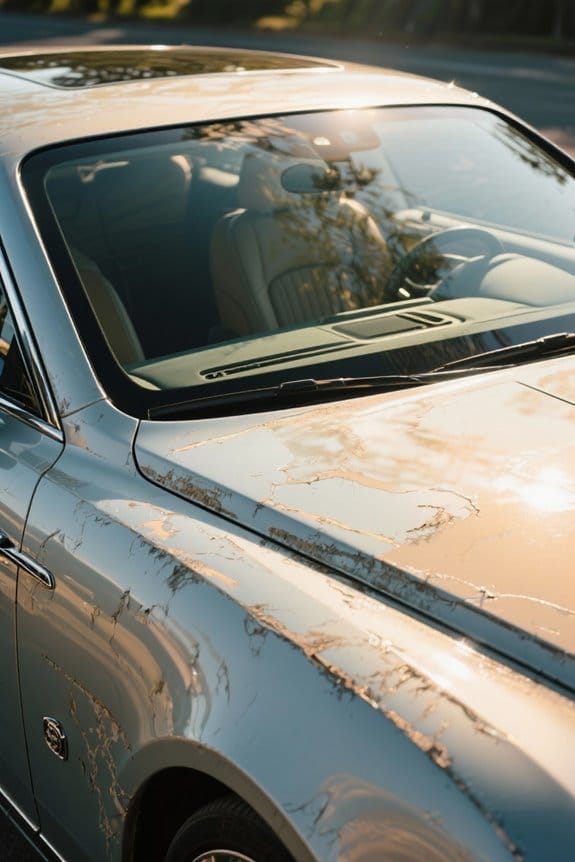
A few seasons of bright sun can quietly ruin a car’s finish. UV rays fragment paint molecules, causing paint degradation that shows as fading and chalky dullness. Dark colors fade faster; black and red can lose depth after just 3–5 summers. The clear coat is the protective barrier. With heat and sun exposure it oxidizes, then cracks or peels, exposing raw paint and tanking resale value by hundreds to thousands of dollars. Regular maintenance helps. A $20 bottle of wax with UV protectants applied every 3 months can slow damage. Think of it like sunscreen for your car: skip it and you’ll pay later. “Looks great for now,” a tester joked, “but time reveals the truth.” Using a custom-fit sunshade that blocks up to 99% of UV rays can noticeably reduce interior and finish damage, making it a worthwhile preventive measure and investment for preserving resale value.
Interior Wear: Dashboards, Seats, and Trim Losses

When left baking in sunlit parking lots, dashboards and seats betray a car’s history in plain sight. Dashboard damage can shave $1,200 to $5,000 off resale value. UV exposure fades colors and causes cracking in seats and upholstery. Imagine leather tight as a drum and vinyl brittle like old tape. Interior trim panels become ghostly and cheap-looking, and buyers notice neglect immediately. Regular maintenance matters: a $15 bottle of UV protectant, applied monthly, can delay cracking. Leather conditioner, $10–$25 per tube, restores suppleness. Who wants a car that looks tired despite clean cashmere sweaters in the back seat? Practical care preserves aesthetics and buyer trust. Want confidence at sale time? Protect surfaces now; it pays. Using a high-quality sun shade can reduce interior temperatures and block UV, prolonging material life and resale value sun shade performance.
Exterior Plastic, Headlight, and Rubber Deterioration
While sunny parking lots can make a car feel like a slow-roasting lunch, prolonged UV hits exterior plastics, headlights, and rubber with obvious consequences. Exterior plastic trim and bumpers can fade and become brittle, shaving $1,200–$5,000 off resale value. A headlight left to bake often turns yellow and foggy, cutting visibility and making a car feel unsafe. Rubber parts like seals and weather stripping dry, crack, and invite leaks. Maintenance matters: a $12 UV spray or $25 headlight restoration kit can slow decline. Protective treatments every 6–12 months help. Who wants a car that looks sunburned? Testers joke, “It ages faster than you.” High-quality custom-fit shades can block up to 99% of harmful rays, preserving surfaces and interior comfort with a snug fit.
Common Fixes and Their Cost Versus Value Recovery
One clear rule of thumb: small fixes often pack big resale punch. A $150–$300 professional detailing session can restore your cars exterior shine and reverse UV damage, sometimes adding $1,200–$5,000 in resale value. Faded paint and clear coat failure may need $500–$1,000 refinishing. It hurts to see peeling clear coat. Leather restoration costs about $100–$200 for cleaning and conditioning. Headlight kits run $30–$150 — cheap, fast, effective. Interested in longer protection? Paint protection film or ceramic coatings run $500–$2,000 and help prevent future sun damage. Which choice makes sense depends on age, mileage, and buyer expectations. “Looks cared-for,” says a tester. Small investments often deliver outsized buyer confidence. Choosing a custom-fit sunshade that blocks up to 99% UV can help prevent interior fading and keep your cabin cooler.
Preventive Measures That Preserve Value in Hot Climates
After spending a few hundred bucks fixing clear coat and leather, it makes sense to protect that investment. A car owner can apply protective wax ($15–$40) monthly or opt for ceramic coatings ($300–$800) for long-term UV protection and to prevent sun damage. Park in shade or use a breathable car cover ($30–$150) to limit fading and oxidation. Windshield sun shades cut cabin temps by 20–40°F and reduce interior fading and heat damage to dashboards. Routine washing removes bird droppings and sap that eat paint; think of it as basic CPR for your finish. Choose lighter colors to reflect rays. Need paint correction later? Expect $200–$600. Small steps maintain resale value and spare future headaches. Custom-fit sunshades with advanced insulation can further reduce cabin temperatures and UV exposure.
How to Spot Sun Damage When Buying or Selling
Start with a quick sweep: look for dull, chalky patches on darker paint that suggest heavy UV fading. A $10 paint meter or a simple visual check will reveal sun damage quickly. Inspect the clear coat for cracks or peeling on the hood and roof; those indicate long exposure to the sun and costly repainting, often $500–$2,000. Open the car and scan the dashboard for heat cracks and discoloration — a cracked dash lowers perceived car’s resale value fast. Check headlights for fogging or yellowing; replacement lenses run $50–$200 each. Examine trim around windows and doors for brittleness or fading. Ask the seller when it was garaged. Want to protect your car? A $20 sunshade or $30 car cover goes a long way. Consider investing in a custom-fit windshield shade to maximize UV blocking and interior temperature reduction.
Frequently Asked Questions
How Much Does It Cost to Fix Sun Damage on a Car?
Sun-scorched severity speaks: estimates span $20 to $3,000. He notes sun exposure causes paint fading, vinyl deterioration, interior cracking, windshield damage, dashboard warping, seat discoloration; maintenance frequency, wax protection and varied repair costs matter.
What Is the 30-60-90 Rule for Cars?
The 30-60-90 rule for cars schedules inspections at 30, 60, and 90 days post-purchase to guide car maintenance, detailing services, sun protection, paint preservation, interior damage checks, inform resale expectations, manage value depreciation, buyer perceptions, auto insurance, market trends.
Is It Worth Fixing Cosmetic Damage on a Car Before Selling?
Yes; they judge that cosmetic repairs like paint restoration and professional detailing usually improve resale value. Considering buyer perception, market trends, vehicle aesthetics and buyer negotiation, a cost benefit analysis informs an effective selling strategy.
How Much Does Damage Reduce Car Value?
About 20% less on average. He notes resale value drops from $1,200–$5,000 due to sun exposure, paint fading and interior damage; heat effects raise depreciation costs, maintenance expenses, influence market demand, buyer perception, and repair options.


