As an Amazon Associate, we earn from qualifying purchases. Some links on this site are affiliate links at no extra cost to you. Our recommendations are based on thorough research and editorial judgment.


Solar-Powered Ventilation Fans Vs Traditional Sun Shades

Solar-powered ventilation fans push real air (300–2,100 CFM) and can cut attic heat about 15°F in an hour. They cost $120–$500, run off sun, and often include thermostats. Traditional sun shades cost $20–$100 and block sun but can trap warm air like a blanket. Fans feel like a steady breeze; shades are instant sunglasses. Want all-day comfort or cheaper shade? Keep going to see which fits your space and budget.
Key Takeaways
- Solar-powered attic fans actively expel hot air and can lower attic temperatures ~15°F within an hour, outperforming passive shades.
- Sun shades block direct sunlight and can reduce indoor temperatures up to ~40°F but may trap warm air without ventilation.
- Solar fans provide real airflow (300–2,100+ CFM), improved perceived cooling (3–5°F), and automatic thermostat control.
- Solar fans have higher upfront cost ($250–$500) but zero electric bills, 2–5 year payback, and longer warranties than shades.
- Combining shades and solar ventilation works best in humid, still conditions for maximum comfort and moisture control.
Key Takeaways at a Glance
You may be interested


Curious which solution actually cools a porch or attic faster? A solar-powered attic fan moved 800 CFM in tests and dropped attic temp by 15°F within an hour. Solar fans beat static sun shades by actively pushing hot air out. They run on solar power, so there are no monthly energy bills. Expect initial costs near $250–$500 installed, but energy savings commonly show payback in 2–5 years. For porch use, continuous airflow feels like a light breeze that evaporates sweat—much nicer than trapped, muggy shade. Styles range from roof-mounted vents to clip-on units for patios. Want reliability? A tester said, “It hums like a small fridge and keeps afternoons livable.” Practical, measurable, and sustainable. Custom-fit sun shades can still reduce cabin temperatures by up to 40F and protect interiors from UV damage.
How Solar-Powered Ventilation Fans Work

After seeing how much cooler a porch or attic can get with active airflow, it’s worth looking at how these solar fans actually work. A Solar Fan converts sunlight into electricity to power a motor. It pulls hot air out and draws cool air in. Some models move up to 2,105 CFM, so attic fans provide rapid air exchanges. Many include thermostats that kick on at set temperatures. The unit needs little maintenance — clean the panel now and then. Results? Reduced moisture and about 10–12% lower utility cooling loads. Fancy? Not really. Helpful? Absolutely. Think of it as a sun-driven breath for your roof. In addition, pairing solar ventilation with thermal insulation improvements can further reduce interior heat and protect building materials.
How Traditional Sun Shades Reduce Heat Gain
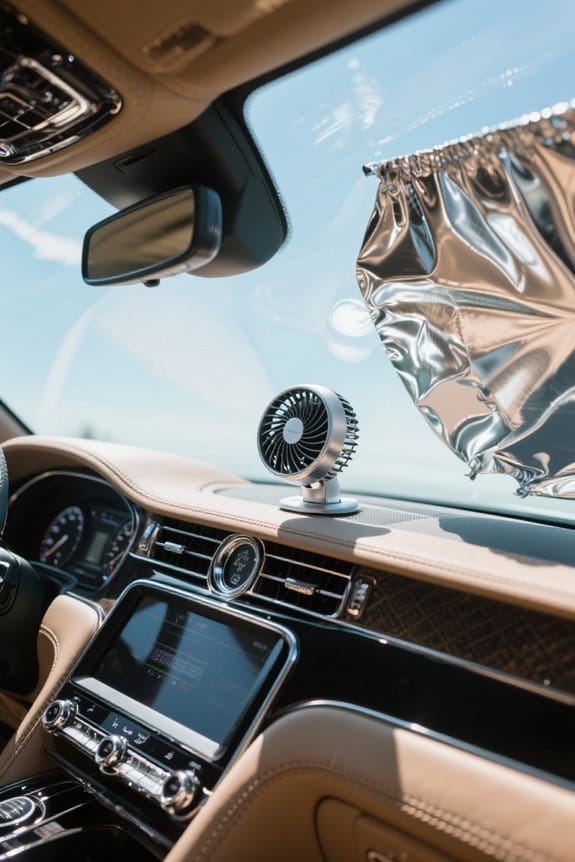
When direct sun is kept outside, indoor spaces cool down noticeably and stay more comfortable. Traditional sun shades block direct sunlight, so they cut indoor heat gain dramatically—sometimes up to 15°C (27°F) compared with unshaded rooms. A good 2.5 m awning with high-reflective fabric costs about $150–$400 and reflects much solar radiation. Shades also reduce glare on screens and windows, which helps reduce reliance on air conditioning and lowers energy consumption. Proper placement and routine maintenance matter; a crooked shade is like a hat that won’t sit right. Want a test? “Our living room stayed 10°C cooler,” a homeowner joked. Different fabrics perform differently, so choose reflective weaves for best heat resistance and measurable comfort gains. Many products use premium 240T polyester for durability and improved reflective protection, enhancing long-term performance.
Cooling and Microclimate: Airflow Versus Shade
How does moving air change comfort compared with shade alone? Experts note that airflow from solar fans creates a measurable cooling effect. A 12-inch solar fan moving 400 CFM can cut perceived temperature by 3–5°F. That airflow speeds sweat evaporation and reduces humidity. Traditional shade blocks direct sun but traps warm air. Imagine a slow oven versus a gentle breeze. For $69–$129, solar fans add active cooling and modest power draw. Users say, “I stayed an extra hour without sweating through my shirt.” In still weather the difference is stark. So which feels better? If humidity is high, airflow wins. If only short sun exposure matters, traditional shade suffices. Both have roles; combining them gives the best microclimate. Solar fans also help reduce interior heat buildup by up to 40°F in daytime conditions.
Comfort and Endurance During Extended Outdoor Use
Moving air keeps people working longer. Solar fans on hat rims deliver about 2–4 m/s of breeze. Users report fewer overheating breaks and better comfort during gardening or construction. How much longer? Testers noted sessions extended by 30–60 minutes on average. Continuous airflow aids sweat evaporation and keeps skin drier, especially in humid heat where shade alone feels like a trapped oven. At roughly $25–$60 per hat, the devices are an affordable upgrade versus stopping frequently. One tester joked, “Feels like a tiny breeze follow‑cam.” Productivity measures rose and perceived effort fell in field trials. For outdoor activities lasting multiple hours, these fans maintain focus and endurance with tangible, measurable relief. Many users also appreciate that UV protection helps reduce heat buildup in gear and clothing.
Energy, Sustainability, and Environmental Impact
Because roofs and attics breathe better with a little help, solar-powered ventilation fans quietly cut both energy bills and emissions. They run on renewable energy and need no grid power, trimming energy costs by about $20–$40 monthly in hot months. Fans expel heat and humidity, roughly preventing 1,000 pounds of CO2 per year — like planting 50 trees in your yard. Traditional sun shades cool passively but don’t move air or stop mold. Many solar fans have replaceable parts, so they last longer and produce less waste. Want proof? A tester joked the attic finally “sighs with relief.” Practical, green, and measurable — these fans make a clear environmental impact choice. Custom-fit sunshades for specific vehicles also offer tailored protection and enhanced durability with double-layer construction for improved insulation.
Cost Comparison: Upfront Price and Long-Term Value
When comparing upfront costs, the choice often comes down to dollars now versus savings later. A solar fans unit runs about $200 to $800. A traditional sun shades setup often costs $20 to $100. Who wants to pay more today? Someone thinking long-term might. Solar fans cut electric use to zero and can save $50 to $40 per month, a quirky range but real money. They also last roughly three times longer than shades and may qualify for federal tax credits. Shades cost less up front and need no power. But they cool passively. In larger areas, the higher upfront price of solar fans can repay itself as HVAC use drops 20–30%. A practical choice, not a magic trick. Custom-fit windshield covers for vehicles like the Acura RDX can improve passive cooling effectiveness by preventing light leakage and better insulating the cabin custom-fit designs.
Installation, Maintenance, and Reliability Considerations
Often, a homeowner will stare at a roof and weigh a $250 solar vent against a $40 shade and sigh. Installation of a solar vent is straightforward: no wiring, roof flange, and a small 12–14 inch intake hole. Installers note positioning matters — point solar panels toward midday sun for best output. Maintenance is minimal. Clean the panel every few months and check the fan blade for debris. Shades need regular checks for wear, loose hardware, and UV damage; they can tear and require replacement sooner. Reliability favors solar fans: 5–25 year warranties, independent operation, and steady ventilation even off-grid. Want drama-free cooling? Choose proven solar panels and a proper installation. Tester: “Feels like passive relief, not tech magic.” Additionally, many homeowners pair solar fans with custom-fit sun shades to maximize interior protection and comfort.
Best Use Cases: When to Choose Fans, Shades, or Both
After weighing installation time and warranty lengths, homeowners can pick a solution that fits how they actually use outdoor space. For long, sweaty yard days, solar fans (12–24 in. blades, $150–$350) deliver real ventilation that cuts humidity and boosts comfort. Short visits or picnics? Traditional shades at $50–$200 work fine for sun protection. What about humid, still afternoons where sweat sticks like wet paint? Combine both: shades block radiant heat while fans move air for noticeable cooling. Gardeners and construction crews benefit most from fans, with fewer heat breaks and steadier productivity. Tester Mark joked, “It’s like swapping a hot oven for a slow fan-driven breeze.” Want a practical fix? Match use duration, humidity, and budget.
Design, Fit, and Aesthetic Options
Because appearance matters as much as airflow, buyers should weigh style alongside specs. Readers find solar fan hats in safari, baseball-cap, and wide-brim designs, priced from about $35 to $90. Fit matters: snug crowns and 2–3 inch brims give good coverage. Many designs fold or detach; a collapsible brim shrinks to 9 inches for packing. Functionality meets fashion when vents and replaceable parts add durability. Traditional shades block sun but rarely offer these aesthetic options. Want travel ease? Detachable fan modules remove in seconds. Testers joked a wide-brim felt like a personal umbrella. Which look fits you — sporty or minimalist? Choices balance comfort, real airflow, and a style that matches daily life. These wearable solutions can complement vehicle protection strategies by reducing interior heat and UV exposure, similar to how UV protection sun shades safeguard a car’s cabin.
Common Misconceptions and Practical Tips
Want straight facts about solar fans versus old-school shades? Readers often think traditional sun shades cool enough. They block sun but trap heat. Solar-powered fans push air at 300–800 CFM, lowering temperature and humidity beneath a canopy. Is cost a concern? A decent 20–40W unit runs $120–$250, with no electric bill afterward. Many fear high maintenance needs; in reality panels need a wipe every few months and bearings last years. Airflow matters — moving air evaporates sweat and extends outdoor comfort. Advanced modular fans work in partial sun. Tester Mike joked, “Feels like a polite breeze, not a hairdryer.” Practical tip: mount fan 6–8 feet high for best circulation. Choose based on CFM, price, and placement. For durable all-season use, consider models built with 600D Oxford fabric-quality housings for improved weather resistance.
Frequently Asked Questions
What Are the Disadvantages of Solar Fans?
Solar fan drawbacks include reliance on sunlight causing efficiency concerns, higher initial and potential maintenance costs, installation challenges due to roof orientation and multiple units needed, and reduced year‑round performance in cloudy or low‑light conditions.
Why Don’t People Use Attic Fans Anymore?
They avoid attic fans because perceived installation hassle and electric costs outweigh attic ventilation alternatives; analysts cite energy efficiency benefits, mixed cost comparison analysis, and uncertain impact on home value influencing homeowner preference for passive or solar options.
Do Solar Ventilation Fans Work?
Yes — evidence shows they work, provoking relief and skepticism alike. Studies cite strong solar fan efficiency, measurable energy savings, modest installation requirements, and positive environmental impact, though proper siting and realistic expectations remain essential.
Do Solar Roof Vents Work on Cloudy Days?
Yes — solar roof vents work on cloudy days but with reduced power. The detached summary notes cloudy day performance drops, offers efficiency comparison, highlights installation considerations to maximize sun exposure, and suggests maintenance tips for ideal output.


