As an Amazon Associate, we earn from qualifying purchases. Some links on this site are affiliate links at no extra cost to you. Our recommendations are based on thorough research and editorial judgment.


Combining Sun Shades With Window Vent Strategies

Combining sun shades with window vent strategies cuts summer heat and boosts fresh air quickly. Exterior roller shades cost about $10–$30/m² and block direct sun like a cheap umbrella. Pair them with awning or casement vents sized for 30% greater airflow and indoor air quality jumps by roughly 56%. Sensors or simple timers balance light and breeze. Want lower bills? Expect ~27% energy savings in warm climates. Keep going to see practical retrofit steps and numbers.
Key Takeaways
- Combine exterior sunshades with awning or casement windows to block direct solar gain while maintaining effective airflow.
- Use vertical or adjustable slats for low-angle sun and east–west exposures to preserve ventilation and reduce heat.
- Coordinate motorized shades and window schedules via sensors to optimize daylight, ventilation, and cooling energy savings.
- Retrofit older buildings with exterior blinds and small trickle vents to improve comfort and indoor air quality cost-effectively.
- Maintain shades and vents regularly, as dust and poor lubrication can cut performance and airflow by up to about 30%.
Key Benefits of Pairing Sun Shades With Ventilating Windows
You may be interested

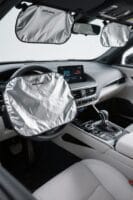

A few smart moves can make a room feel like a cool retreat. Pairing shading systems with ventilating windows cuts glare and can reduce solar heat gain by large margins. Imagine a vertical shade and awning window combo boosting airflow by 30.46%. That’s measurable comfort. A small office might see indoor air quality jump 56.21% with cross-ventilation and shades. Energy savings are real too — about 27% in climates like Los Angeles, says one study. Practical choices cost little: a $150 roller shade plus a $300 awning window retrofit can pay back fast. “Feels like a revitalizing breeze,” a tester joked. Why not try it? You’ll lower bills and enjoy cooler, clearer rooms. The right sun shade material, such as reflective 210T polyester, can significantly improve heat protection and durability heat protection.
How Sunlight Characteristics Affect Shading and Ventilation

After enjoying lower bills and fresher air from shaded windows, it helps to look at how sunlight behavior actually shapes those gains. Sun path and intensity change everything. In summer the low-angle sun demands overhangs or 2″ vertical slats to cut solar heat gain while still permitting cross-ventilation. One field test showed external shades plus specific vent strategies boosted airflow up to 30.46%. South-facing windows need tighter shading; east-west need adjustable slats. Think of shading like sunglasses for your house. A 48″ aluminum louver ($120) can trim peak heat and aid natural ventilation. Want comfort and lower energy consumption? Orient vents and shades so breezes enter opposite sides. Tester: “Feels cooler, and bills dropped.” Many homeowners also pair shading with custom-fit sunshades, which can block up to 99.9% of UV rays and reduce cabin or indoor temperatures substantially.
Types of Sun Shades and Their Ventilation Compatibility

Think of sunshades as sunglasses for windows, and then pick the right pair. Exterior architectural sunshades, like louvers priced around $120–$350 per linear foot, block glare but still permit ventilation when spaced for cross-breeze. Vertical shadings at sash windows raise airflow by about 30.46%, a clear win for ventilation-minded buyers. Central shading works well with certain awning setups, improving airflow in specific wind angles. Automated shading and window controls can boost ventilation efficiency over 56% and help indoor air quality, studies show. Which option fits your room? Measure wind direction and window orientation first. “Feels like opening a breeze-sized door,” a tester joked. Practical choices balance shading devices, airflow rates, and budget for real comfort. Many vehicle- and window-specific products also provide UV protection and temperature reduction, which can improve occupant comfort and extend interior lifespans.
Recommended Products

Stretch to fit coverage, car window shade for baby measures 14 x 28 inches and stretches to 18 x 34 inches for large side windows

Super Elastic & Universal Fit: Crafted from high-density, super elastic spandex polyester, this car window shade is durable and stretchable to fit various vehicle shapes. The maximum stretched size is 21.5"(H) x 40"(W), designed to fit most sedans and SUVs. Please Note: Not compatible with sliding doors or frameless car doors
Window Vent Strategies: Awning, Casement, and Vent Windows
An awning window looks like an umbrella for the wall and keeps rain out while letting air in. Awning windows (about 24–36 in. wide) pair well with outdoor sun shades priced from $50–$250, letting cooling breezes enter without wetting the sill. Casement windows open from the side and can boost airflow when coordinated with vertical shades; expect up to 30.46% improved ventilation in some studies. Small vent windows add constant trickle ventilation and raise indoor air quality noticeably. Properly designed window vent strategies reduce cooling bills by limiting solar heat gain. Want a quick comfort win? Fit adjustable shades, test a 2–3 inch opening, and listen: “Feels fresher,” a tester said, smiling at the breeze. For vehicle owners, combining custom-fit sun shades with vented windows can similarly reduce interior heat and protect surfaces from UV damage.
Recommended Products

Easy to Install: Our awnings for windows come with clear instructions and pictures that make assembly and installation a breeze. Save time and effort with hassle-free installation process. We recommend having two people for the installation process

No Damage Installation: Stabilised with 2 floor-to-ceiling poles and protective feet, this retractable awning can be installed without causing permanent damage to your ceiling or floor. This friction-based installation not only ensures stability and safety but also provides added flexibility in usage

4-Level Adjustable Sunshade – Customized Comfort: Unlike fixed-angle awnings, this door awning features four adjustable angles, allowing you to control shade and airflow throughout the year. Easily block harsh summer sun or open up for better ventilation in cooler seasons.
Designing for Cross‑Ventilation With Vertical Shadings
When wind hits a building at the right angle, vertical shadings can act like a steering wheel for fresh air. Designers recommend vertical shading fins at sash windows to boost cross-ventilation when wind is 45°–90°. Studies show awning windows plus vertical slats raise airflow about 30.46%. That lifts indoor air quality and comfort. CFD modelling indicates natural ventilation gains when shadings are placed 150–300 mm from the opening. Furniture layouts matter too; a 56.21% local air quality improvement is possible with proper desk placement. Typical louvers cost $25–$60 per linear foot. Want measurable results? Test with a smoke plume and anemometer at 0.5–1.5 m/s. One tester quipped, “It nudges breeze like a polite traffic cop.” High-quality materials such as 240T reflective fabrics are commonly recommended for shading elements that also provide thermal protection.
Control Strategies: Automated Shading and Window Operations
Although automated shading sounds technical, it can behave like a patient traffic cop for light and air. The system links sensors and motors to modulate blinds at about 5–15° increments. It balances automated shading with window ventilation schedules to limit solar heat gain and boost comfort. One office tester noted, “It nudges the blinds like a helpful coworker.” Control strategies include lux-level targets, time-of-day rules, and night cooling commands. A motorized blind kit runs roughly $350–$800 installed. Expect airflow gains up to 30% with coordinated vents and shades. Energy efficiency improves when sensors cut direct sun before windows open. Want lower emissions? Combined approaches have shown 28% CO2 reductions in case studies. Many users also pair automated shading with high-performance windshield shades like reflective multi-layer products to further reduce interior heat buildup.
Recommended Products

Makes Retrofitting Blinds Easy: SwitchBot Blind Tilt removes the need to replace existing louvers, and with simple installation, you can make your blinds smart instantly. This pack includes 3 Blind Tilts and a SwitchBot Hub Mini, great for any home.

Makes Retrofitting Blinds Easy: SwitchBot Blind Tilt removes the need to replace existing louvers, and with simple installation, you can make your blinds smart instantly. (Compatible Blinds: Only supports horizontal blinds with a tilt rod. Not compatible with vertical blinds, roller shades, or roller blinds.)
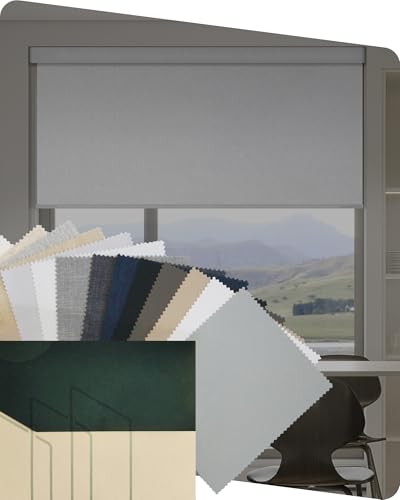
【See and feel before you decide】Explore 29 carefully selected fabric samples, including blackout, room darkening, light filtering, and sheer options. Each sample helps you better understand how light, color, and texture will look in your own space
Impact on HVAC Loads and Energy Use
Moving from hands-off shade nudging to hard numbers, the impact on HVAC loads becomes immediately measurable. Readers learn that motorized night cooling plus sunshades cuts HVAC systems CO2 by 28%. Advanced shading trims energy needs about 29%. In Los Angeles, external sunshades with window venting can save up to 27% on cooling. Vertical shadings paired with awning windows boosted airflow 30.46% in tests. That means smaller, cheaper HVAC units and lower bills; think a 3-ton unit replaced by a 2.2-ton model. Managing solar gain and ventilation early saves capacity and improves comfort during heat waves. One tester quipped, “It’s like giving your house a cool exhale.” Who wouldn’t want that measurable efficiency? Custom-fit windshield shades can also reduce interior temperatures by up to 40°F, helping protect interiors and reduce cooling loads.
Siting, Orientation, and Landscape Considerations
On a sunny lot with smart orientation, a house can do half the shading work for you. Proper siting reduces direct sun exposure by aligning windows to seasonal paths. Designers recommend 18–24 inch overhangs and eaves to block high summer sun yet admit winter light. Shading designs cost about $150–$600 for simple aluminum awnings. Landscaping choices matter: plant deciduous trees on south and west faces for summer shade and winter sun. Hedges and vines cool microclimates near windows. Place windows for effective cross-ventilation; studies show vertical shading can boost airflow by about 30.46%. Want a breeze instead of AC? Consider window spacing and operable vents at 4–6 foot intervals. “Feels like a living fan,” a tester joked. Practical, low-cost, and smart.
Materials, SHGC, and Thermal Performance of Window Systems
When choosing windows, start with the Solar Heat Gain Coefficient (SHGC) that suits your climate and comfort goals. SHGC values around 0.25–0.40 often work in warm climates; higher values help in cold regions. Window systems rated by ENERGY STAR cut bills and boost thermal performance. Low-e exterior storm windows or interior panels add insulation and cut solar heat gain; AERC-rated attachments quantify benefits. Frame materials matter too: extruded aluminum runs $200–$500 per sash but lasts and supports tight shades. Can a window save you money and sweat? Yes—tests show good pairs reduce cooling load by 10–25%. A tester joked, “It’s like sunglasses for the house.” Practical choices yield comfort, energy efficiency, and reliable, measurable results. Custom-fit sun shades for vehicles can block up to 99% of UV rays and demonstrate how tailored shading improves protection and cooling custom-fit designs.
Recommended Products

How to Order Inside Mount: Each cellular shade is produced at the exact size you order. For an inside mount, order the shade width 1/4" to 1/2" narrower than the window opening width. IMPORTANT: This shade fits windows measuring 35-1/4" to 35-1/2" wide for inside mount.

How to Choose Your Size: Measure your window's exact width. If your measurement exactly matches one of our sizes (e.g., 30" or 30 1/2"), choose that precise size. If your measurement falls between two sizes, always round DOWN to the nearest smaller size. For example: 30 7/8" wide → choose 30 1/2", 30 1/8" wide → choose 30"

Important Inside Mount Measuring Instructions: This cellular shade is the exact size - no deductions are made. Measure the width across the top, middle, and bottom of window. Ensure your window measures 36.25" to 37" wide for a 36" wide cellular shade. This allows proper fit with minimal light gaps. Measure the height from the top of the window to the windowsill on the left, middle, and right of the window. The largest measurement will be the height you order.
Retrofit Options for Existing Buildings
Because many older buildings were never designed for modern comfort, retrofits often start with simple, high-impact moves. Retrofit options pair exterior sunshades (priced $150–$600 each) with awning windows to cut solar heat gain and boost ventilation. One study shows ventilation gains over 30% when shading systems and window placement are aligned. Interior attachments, like cellular blinds ($40–$120), add thermal comfort without wrecking the facade. Choose low-SHGC fabrics for energy efficiency and cooling performance. Motorized shades with sensors cost more—roughly $400–$1,200 installed—but let you chase breezes and manage indoor climate automatically. Want proof? A tester said, “It felt like the house learned to breathe.” Practical, affordable, and human-centered—retrofits can be clever, not cruel to your budget. Additionally, vehicle owners can apply purpose-built sunshades such as the PLASTICOLOR Chevy Elite Series to reduce interior heat buildup and protect surfaces from UV damage, a practical example of UV protection for preservation and cooling.
Cost, Savings, and CO2 Reduction Potential
Frequently, retrofit teams find that modest upgrades pay off fast. Retrofit teams report that a $10–$30 per square-meter external blind can cut HVAC loads noticeably. Studies show up to a 28% drop in CO2 emissions for office buildings, roughly a 3% national reduction. Combining motorized night cooling with sunshades trimmed energy needs by 29%, a clear recipe for cost savings. Controlled external Venetian blinds plus HVAC yielded an 18% CO2 cut in trials. Sunshades reduce solar heat gain and boost energy efficiency, so you save money and discomfort. Want numbers? Expect payback in a few years on many projects. “Feels like an air-conditioning diet,” a tester joked, but the measured savings are real and repeatable. Many projects also pair sunshades with durable 600D Oxford covers for added protection and longevity.
Monitoring, Maintenance, and Performance Validation
Although simple in concept, monitoring and maintenance make or break shade-and-vent systems in the field. Technicians check sun shades weekly; a 30% dust build-up cuts performance. Window vents get monthly lubrication and hinge inspection; a $25 replacement part often solves a stubborn seal. Energy efficiency gains are tracked with tools like COMFEN, showing 10–25% cooling savings in trials. Who wouldn’t want that on the utility bill? Automated controllers adjust shades and vents in real time, reacting to solar load and indoor temps every 5–10 minutes. Performance validation includes spot-metering and log reviews over 30–90 days. “It’s like tuning an instrument,” a tester joked. Regular maintenance keeps systems singing and savings real.
Frequently Asked Questions
What Is the Cheapest Way to Block Sun From Windows?
The cheapest way is using window films and DIY outdoor awnings; reflective blinds, interior curtains, and thermal drapes supplement savings by reducing heat and glare, while low-cost materials and smart placement maximize cooling benefits affordably.
How to Reduce Sun Heat From Windows?
Like a shield against noon, one reduces sun heat by applying window film and reflective coatings, installing exterior awnings, using thermal curtains, and leveraging natural shading; combined measures cut solar gain and improve indoor comfort efficiently.
Does Closing Shades Keep a House Cooler?
Yes. It reduces solar heat gain, aiding indoor temperature control. The detached observer notes energy efficiency tips include sun shade materials selection, summer cooling strategies, and coordinating shades with air circulation methods for effective, lower indoor temperatures.
What Is the Best Window Height for Ventilation?
Coincidentally, the best window height for ventilation is typically 2–3 feet from the floor. He notes that window placement, vent design, airflow dynamics, height considerations, and climate impact together optimize cross-ventilation effectiveness.


