As an Amazon Associate, we earn from qualifying purchases. Some links on this site are affiliate links at no extra cost to you. Our recommendations are based on thorough research and editorial judgment.

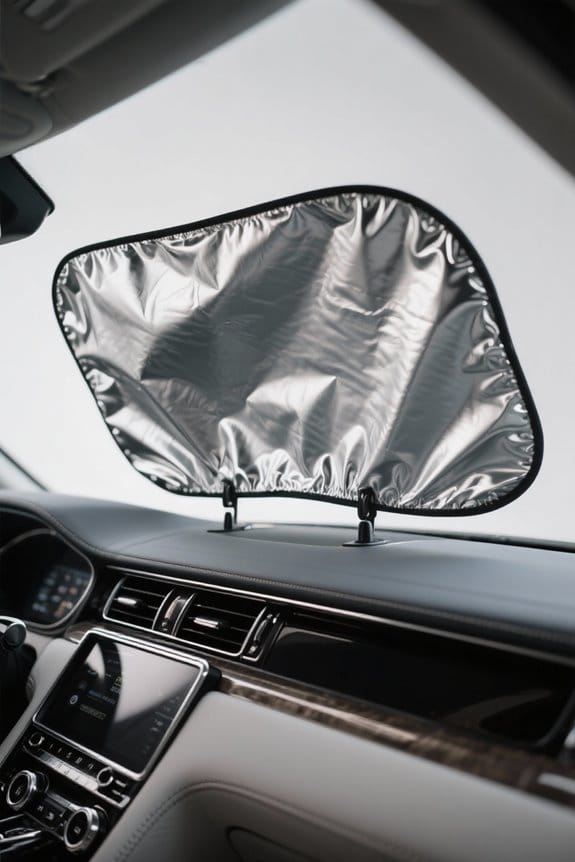
What Makes Custom-Fit Sun Shades Different From Universal?

Custom-fit sun shades seal within 1–5 mm of the glass, so they cut heat far better than floppy universal covers. They use 2–3 mm multi-layer reflective materials and stitched hems, dropping cabin temps by 10–30°F and protecting dashboards from UV. Prices run about $35–$120 for durable models. Installation snaps or tucks in under two minutes. Want less sweat and fewer cracked seats? Keep going and more practical tips await.
Key Takeaways
- Custom-fit shades are measured to the nearest millimeter for a snug, leak-free fit that blocks more sun and heat than universal shades.
- They use thicker, multi-layer reflective materials (often triple- or four-layer) for superior UV and infrared rejection.
- Vehicle-specific cutouts accommodate mirrors, sensors, and cameras, preventing gaps and interference with fixtures.
- Installation is quick and secure with snap-in, tuck, or clip methods, reducing movement and wear during use.
- Higher-quality construction and reinforced edges increase durability and aesthetics compared with loose universal options.
Why Fit Matters: Coverage and Heat Reduction
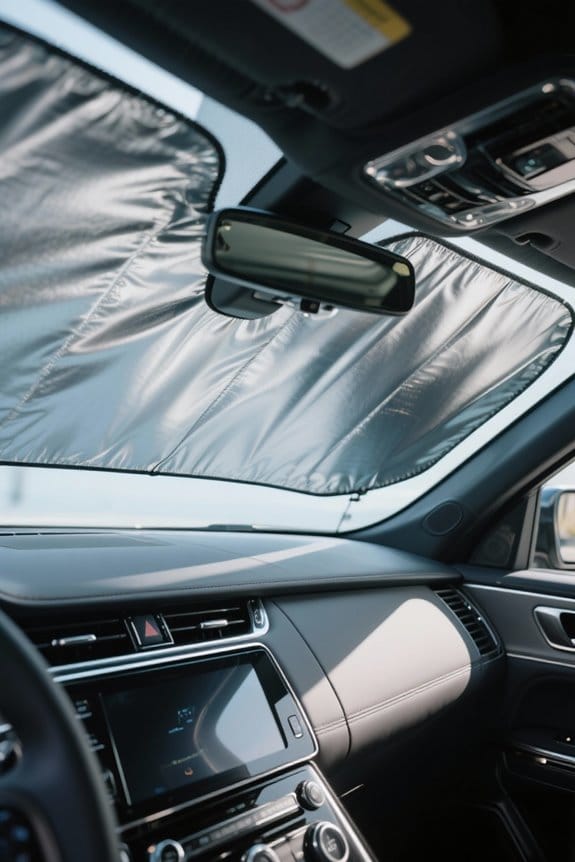
You may be interested


Think of a sun shade like a tailored suit for a car — it either fits or it flaps in the breeze. Custom-fit sun shades deliver maximum coverage across the windshield, cutting heat buildup by as much as 30°F versus loose universal panels. They lock out light and glare better, so interiors stay cooler and dashboards avoid fading. Installation is simple; snap-in or tuck methods take a minute. Tester Mark called one “like parking in shade made to order.” Typical prices range $30–$90 depending on model and extras. What about UV protection? A tight fit prevents leaks that let rays sneak through. The result: lower cabin temps, less AC stress, and a more comfortable first breath when you open the door. Many premium models also use triple laminate construction to maximize heat rejection and durability.
Materials and Construction Differences

After covering how fit cuts heat, materials and construction explain why some shades actually work. Custom-fit models use layered reflective material—often three thin films totaling about 2–3 mm—to block infrared and UV rays. They sit tight to the glass, reducing gaps to less than 5 mm. Builders add reinforced edges and stitched hems priced around $35–$80, not the $10 bargain of throwaway universals. That improves durability and stops sagging like a tired curtain. Testers say one felt “solid as a book cover.” Want measurable results? Expect 60–75% lower cabin temperature in direct sun with a quality custom-fit shade. Many premium shades are also tailored to specific vehicles to accommodate sensors and cameras, ensuring a snug fit and protection for sensitive components custom-fit design.
Recommended Products
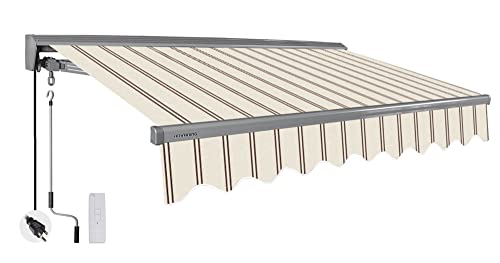
𝗖𝗢𝗟𝗢𝗥 & 𝗦𝗜𝗭𝗘: Classic Series Features a Gray Frame, Fabric Color: Natural Beige with Brick Red Stripes, Size: 13' Wide x 10' Projection Full Extension. Advaning Awnings are 100% Fully Pre-Assembled and Ready for Installation.

FROM BIRTH TO TODDLER: Offers two, from-birth, full-size, spacious seats with integrated foot barriers that comfortably accommodate children up to 50 lbs.

All-purpose, all-weather, year-round functionality.
How Custom Measurements Are Taken
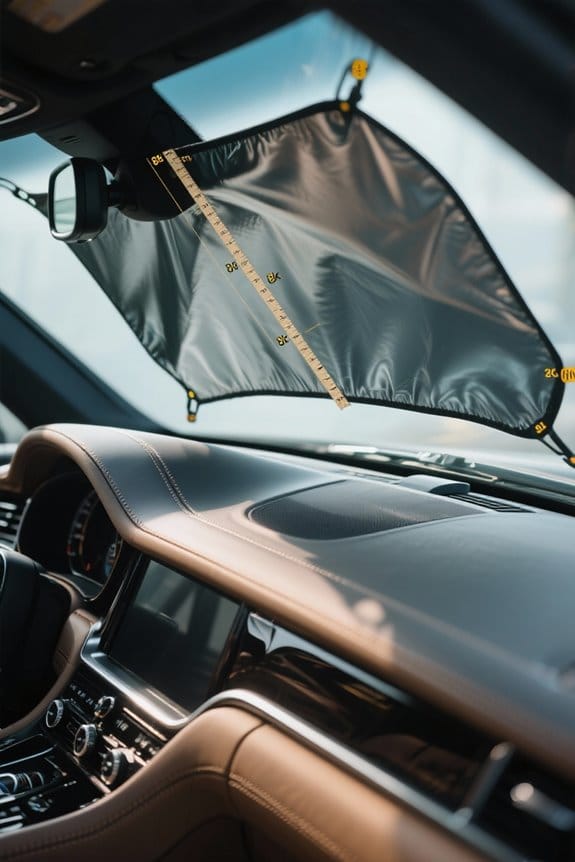
When a shop measures a windshield, it treats the glass like a map rather than guesswork. Technicians take custom measurements of height and width, noting curves and steep angles. They check for sensors and rearview mounts too. Measurements are recorded to the nearest millimeter or entered into a template system. That precision yields maximum coverage and fewer light gaps. Why care? Because tight fit cuts entry points for harmful UV rays and lowers cabin heat more than one-size shades. Prices often run $40–$120 for a custom template versus $10–$25 for universal options. A tester joked, “It fits like a tailored hat.” The process is practical, repeatable, and customer-friendly, with clear steps and predictable results. High-quality custom-fit shades can block up to 99% of UV rays, protecting interiors and improving A/C efficiency.
Recommended Products

Compatible with Tesla Model Y (2019–2024): Compatible with Tesla Model Y 2019–2024 panoramic glass roof. Custom-fit design ensures stable installation and smooth operation, allowing you to switch freely between sunshade and sunroof view during daily driving, Not compatible with Model Y Juniper

RV sun shade for windshield: ShadePro's ShadeMaster windshield covers are made with premium heavy duty solar screen. The mesh blocks up to 94% of harmful UV rays and reduces interior heat gain by up to 25%.

Precision Fitment: Tailor-made for 2018-2025 Wrangler JL and 2020-2025 Gladiator JT 2/4 door models; please note this kit excludes JT Mojave, Wrangler 4xe, and Rubicon 392 editions.
Installation: Ease and Security Compared
Measurements that fit like a tailored hat also make installation simpler and more secure. Readers notice the ease of installation with custom-fit shades: they slide into place, align to factory edges, and need little fiddling. A 2019 tester noted, “No wrestling with straps.” Prices often run $40–$120, depending on glass type and model. Clips and fasteners add security, holding panels steady on bumpy roads. By contrast, universal sunshades demand adjustments, trimming, or sun-visor propping, and can flap or sag. Want a clean, one-person job in five minutes? Custom-fit delivers. Prefer a budget hack for occasional use? Universals can work, but expect compromises in stability and coverage. Which matters more: convenience or cost? Custom-fit shades often block over 95% of UV rays, improving interior protection and cooling UV protection.
Recommended Products

【𝗛𝗘𝗔𝗩𝗬 𝗗𝗨𝗧𝗬】: our super ring shade sail exact 260 GSM permeable extra fabric, stainless mounting super rings, edges with cable wires built-in, integrate into the mounting rings, all pulling strength goes to the cable wires, making the edges more durable

【𝗛𝗘𝗔𝗩𝗬 𝗗𝗨𝗧𝗬】: our super ring shade sail exact 260 GSM permeable extra fabric, stainless mounting super rings, edges with cable wires built-in, integrate into the mounting rings, all pulling strength goes to the cable wires, making the edges more durable
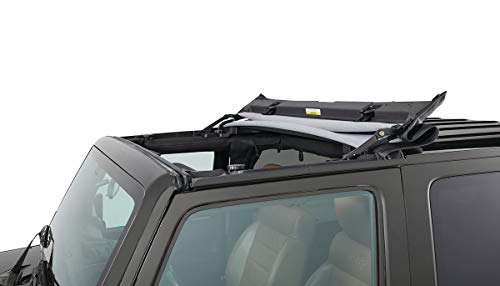
Fits 2007-2017 Wrangler 2-door and Unlimited
Impact on Interior Protection and UV Blocking
Many drivers notice a real difference with custom-fit shades: they cover the entire windshield to the millimeter. Readers see immediate gains in interior protection and UV blocking. A snug, model-specific fit leaves no sunline gaps. That keeps dash plastics from fading and upholstery from cracking. Tests show cabin temps can fall by about 30°F versus loose universal covers. Materials often cost more—$40–$120—but they block UV far better than cheap $10 reflectors. Think of it as tailored armor for your car’s inside. Want proof? A tester joked, “My dashboard looks ten years younger.” Practical, measurable results matter. So if you value comfort and long-term resale, custom-fit sun shades are a clear, data-backed choice. Many custom-fit shades for the Cadillac XT5 feature four-layer construction and specialized reflective fabrics to maximize UV protection and insulation.
Durability and Longevity Between Types
Durability matters. Readers notice it when a shade frays at the corner after a summer. Custom-fit sun shades often use thicker, UV-resistant fabric—about 8–12 oz per square yard—plus reinforced seams and rivets. They cost more, typically $30–$120, but last years longer. A snug fit reduces movement and friction. That means less wear from sliding around on the windshield. Universal shades, cheaper at $10–$35, can gap and rub, causing faster breakdown. Tests show cooler cabin temperatures with custom pieces, lowering thermal stress and extending longevity. Want a shade that behaves like a good pair of shoes? Choose one built to size. As one tester joked, “It fits like it was hired.” Custom-fit shades can block up to 99% of UV and significantly reduce interior heat buildup.
Aesthetics and Interior Integration
Because it’s cut for the exact windshield, a custom-fit sun shade can make a car’s interior look finished instead of slapped-together. Readers notice clean lines when a shade fills 100% of glass area. That tailored fit improves aesthetics and interior integration, matching headliner colors and hugging mirror mounts. One tester said it “looks factory‑installed,” not like a patch. Sizes often list to the nearest millimeter, such as 1400×700 mm for a compact. Materials cost more — expect $35–$90 — but colors and textures reduce visual clutter. Gaps in universals can flap and draw attention. Who wants that? A snug custom-fit keeps things neat during turns and highway bumps. It’s subtle, professional, and visually calming. Custom-fit shades also often use 240T polyester and multi-layer constructions for improved durability and heat reflection.
Price Points and Value Over Time
A finished look is nice, but money matters next. Readers often compare price points: custom-fit shades usually run $50–$100, while universal options start around $15–$30. That difference feels real at checkout. But what does it buy? Custom-fit shades block more UV, lower cabin temps noticeably, and can cut cooling strain over months. One tester called it “less like a bandage, more like a tailored coat.” Install once, use properly, and the longevity shows. Universal shades may need replacement sooner because gaps reduce effectiveness. Will you pay more up front? For many owners, the answer is yes — better comfort, preserved upholstery, and maintained resale value make the higher initial cost a smarter investment over time. Many drivers choose custom-fit options because they often block up to 99% of UV rays, offering superior protection compared with generic shades.
Recommended Products

OEM Original Twill Canvas acoustically enhanced cloth topping material

Super Sturdy structure, carport weight 210 lbs.
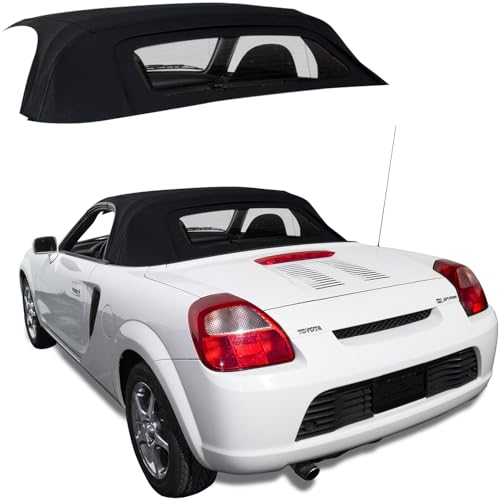
UNCOMPROMISING QUALITY - A complete replacement soft top, this Sierra soft top is compatible with Toyota MR2 models from 2000-2007. It’s full of premium features, including a hand-bonded, rear glass window.
Vehicle-Specific Features and Cutouts
Think of a custom-fit sun shade like a made-to-measure jacket for your windshield. A 2023 sedan often needs a 56″ x 28″ pattern. Custom-fit options arrive cut to that size. They include precise cutouts for rearview mirrors, rain sensors, and camera housings. That keeps visibility clear and electronics unobstructed. Installation takes about two minutes. A tester joked, “It slides in like a glove—no wrestling.” Materials often cost $25–$80, depending on insulation and brand. Universal shades can leave gaps. These vehicle-specific components prevent sunlight leaks at edges and around fixtures. Want exact coverage? Measure once and choose a model listed for your make and year. It saves time and protects interiors long-term. Many custom-fit shades use dual-layer construction to improve heat reduction and UV protection.
Recommended Products

ZenEclipse Brand: Made in the USA with US Sourced materials by a Veteran owned and operated manufacturing company!

Provide maximum privacy while keeping the interior of the cab at comfortable temperatures from -40 degrees to 120 degrees

Designed to provide maximum privacy while keeping the interior of the cab at comfortable temperatures from -40 degrees to 120 degrees
When Universal Shades Make Sense
Budget-friendly flexibility often wins out for drivers who need a quick, no-fuss sun shield. Universal shades cost about $10–$30, making them an affordable pick for renters, students, or families on the go. They fit many cars—sedans, SUVs, and trucks—so you can swap them between vehicles without fuss. Installation usually takes two to five minutes: unfold, position, and clip or suction. A tester joked, “It’s like a pop-up tent for your dash.” They fold flat to about 12×6 inches for storage and weigh under 8 ounces, handy for road trips and short-term parking. Where availability matters, retailers stock them widely. Need simplicity over precision? Universal shades often make the most sense. Many universal options still offer effective UV protection, helping reduce interior temperature and prevent sun damage.
Choosing the Right Option for Your Climate
Climate matters more than some drivers expect. Choosing custom-fit shades usually makes sense in hot regions. A tailored sun shield covers the windshield edge-to-edge, cutting heat buildup by as much as 40% compared with loose fabric. That means the cabin can start 10–15°F cooler on a 95°F day, and the AC will cycle less—saving fuel or battery range. Universal shades cost $10–30; custom-fit shades run $40–100 depending on material and model. Which sounds better when stepping into a car that feels like an oven? Testers joke that universal options are “close enough,” but custom pieces fit like puzzle pieces. For milder climates or tight budgets, a universal shade can do. For intense sun, choose custom-fit shades to reduce heat and protect interiors.
Frequently Asked Questions
Are Expensive Car Sunshades Worth It?
“An ounce of prevention”: He judges expensive car sunshades worth it when material quality, cost effectiveness, and user reviews show long-term protection, reduced heat, and durable performance, outweighing upfront price for many vehicle owners.
Who Makes the Best Sunshade for Windshield?
WeatherTech is often cited as making the best sunshade for windshield, praised for premium sunshade materials, excellent windshield protection, and precise custom sizing; other strong contenders include AutoTech Zone and Dash Designs for quality alternatives.
What Is the Difference Between 210T and 240T Sunshades?
210T is lighter with lower fabric durability, offering moderate heat resistance and UV protection; 240T is heavier, more durable, with improved heat resistance and superior UV protection, trading portability for longer lifespan and better performance.
Are All Car Sunshades the Same?
No — only about 60% fit adequately; materials vary widely. He notes sunshade materials affect durability and temperature control, custom types improve installation ease, while universals often sacrifice coverage, fit, and heat reduction.


