As an Amazon Associate, we earn from qualifying purchases. Some links on this site are affiliate links at no extra cost to you. Our recommendations are based on thorough research and editorial judgment.


Understanding Accordion-Fold Vs Roll-Up Sun Shade Designs

Accordion-fold sunshades unfold like a paper fan and compress to 12–18 inches, costing about $10–$35. They block heat well, cutting interior temps by 8–12°F, and feel like a cozy blanket for a parked car. Roll-up shades retract to a tube, cost $15–$45, and look sleeker but can leave edge hotspots. Installation and storage differ — quick pop versus spring-loaded care. Curious for model picks and fit tips?
Key Takeaways
- Accordion-fold shades use pleated panels that expand/collapse, offering quick setup and compact 12–18 inch storage.
- Roll-up shades use a spring-loaded cylinder to roll flat, providing streamlined storage but possible edge gaps.
- Accordion-fold models typically reduce interior temperatures more (about 8–12°F) and block UV effectively.
- High-quality roll-ups lower dash temperatures (about 5–9°F) but may need brackets and careful installation.
- Accordion shades are cheaper and more decorative; roll-ups tend to be more durable but cost slightly more.
Why Sunshade Design Matters for Interior Protection
You may be interested


Protection matters. Readers learn that sun shades can change daily comfort and long-term care. Accordion-fold models compress to about 12–18 inches long, offering quick storage and Ease of Installation in under a minute. They fold like a paper fan and sometimes leak heat through creases. Roll-up shades lay flat across the windshield, often 56–60 inches wide, and block gaps that cause interior heat buildup. Both types cut UV rays and heat, protecting dashboards and upholstery from fading. Prices run from $10 basic to $60 premium. Which should you pick? Consider parking climate and storage needs. A tester joked, “It’s like choosing between a paperback and a hardcover.” Practical fit remains the decisive factor. Many custom-fit options for specific vehicles can provide full windshield coverage, eliminating gaps that reduce effectiveness.
How Accordion-Fold Sunshades Work

Unfold an accordion-fold sunshade and it snaps into place like a metallic fan, covering a typical windshield that’s about 56–60 inches wide. The design uses multiple panels that open and close like an accordion. Users appreciate accordion-fold sunshades for compact storage; they fold down to a small disk or flat pack. They block sunlight effectively, reducing the vehicle’s interior temperature by several degrees on a hot day. Made from lightweight reflective materials, they’re easy to handle and install. If not properly fitted, expect minor heat leaks—tester note: “fit matters more than flair.” How long do they last? Careful folding prevents creases and extends life. Prices commonly range from $10 to $35, balancing cost and performance. Many accordion-fold designs use double-layer reflective fabric to improve thermal performance and UV protection.
How Roll-Up Sunshades Work

If accordion-fold shades open like a handheld fan, roll-up sunshades behave more like a poster being peeled from a tube. Roll-up sunshades unroll smoothly across the windshield, laying flat without creases for better sunlight deflection. The mechanism is simple: pull, snap or use a small spring to lock the shade. Installation process usually takes under a minute; most models use suction cups or adhesive tabs. Sizes often match common windshields — 55–60 inches wide for sedans, 65–72 inches for SUVs — and prices range $15–$45. When rolled up, they fit in a slim storage bag or secure with built-in Velcro straps. “Feels like instant cool,” a tester joked, folding it away like a tiny sleeping bag. Practical, quick, and tidy. Many roll-up designs also use reflective materials to improve UV protection and keep interiors cooler.
Recommended Products

Compatible with select 2017-2024 Chrysler Pacifica Hybrid, 2017-2024 Chrysler Pacifica, 2020-2020 Chrysler Voyager, 2021-2023 Chrysler Voyager Models. Please confirm fitment to your year, make, and model in Amazon ConfirmedFit prior to purchase.

Compatible with select 2012-2017 Toyota Prius V Models. Please confirm fitment to your year, make, and model in Amazon ConfirmedFit prior to purchase.
Compatible with select 2017-2026 Audi Q7, 2020-2026 Audi SQ7 Models. Please confirm fitment to your year, make, and model in Amazon ConfirmedFit prior to purchase.
Comparing Heat Management and UV Blocking Performance
Many drivers care more about keeping cars cool than about matching interior décor. Accordion-fold sun shades often win on heat management and UV blocking because thicker, layered panels block more sun. Tests show interior temps falling 8–12°F on hot days with a snug accordion fit. Roll-up sun shades can cut heat too. High-quality reflective roll-ups reduced dash temperature by 5–9°F in trials. But roll-up coverage gaps may let hotspots form near edges. Which matters more to you — quick setup or maximum vehicle protection? Prices reflect that: $15–30 for basic roll-ups, $25–60 for durable accordion models. One tester joked, “It’s like a sunscreen for your dash.” Practical choice depends on climate and patience. Stainless steel visors also improve comfort by shading the windshield and reducing glare, especially on trucks with vehicle-specific designs.
Recommended Products

Complete Vehicle Coverage: Custom Fit For Toyota Sienna (2011-2020) Classic Minivan. 8-Piece Set Covers Windshield, All Side Doors, Quarter Windows, And Rear Liftgate For Enhanced Privacy

No Drill Design: A solution to cover your windows without the hassle of drilling holes and install the shades without tools in 30 seconds.
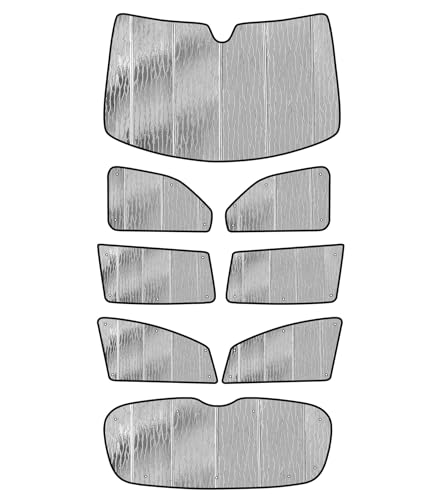
Compatible with: 2011-2017 Honda Odyssey
Fit, Installation, and Daily Usability Differences
A small ritual greets drivers each morning: slide a sun shade across the windshield and decide how much fuss is worth the payoff. Fit matters. Custom accordion-fold models can match a 60–70 inch windshield closely, cutting gaps and helping keep your car cool more effectively. Installation varies. Roll-up shades unroll in seconds and cost $10–$25; they lie flat and resist creases, so daily usability is simple. Accordion types fold compactly for storage and often cost $20–$50, but aligning multiple folds can add time. Which is faster on a busy morning? Roll-up wins for speed; accordion wins for tailored coverage. Testers joke about wresting folds like paper cranes. Practical tip: choose by your storage space and patience. Custom designs like the Custom Fit Windshield provide snug fits that maximize protection and temperature reduction.
Recommended Products

FAST MAGNETIC INSTALLATION FROM THE GROUND: Magne Shade uses a patented magnetic mounting system that allows quick installation and removal from the ground after the initial magnet setup. No ladders, suction cups, snaps, drilling, or permanent modifications required. Telescoping installation rod included.

RV sun shade for windshield: ShadePro's ShadeMaster windshield covers are made with premium heavy duty solar screen. The mesh blocks up to 94% of harmful UV rays and reduces interior heat gain by up to 25%.

IMPORTANT INFORMATION The second image is a template of what you will receive. If unsure or if it looks wrong please initially contact us.
Durability, Maintenance, and Longevity Considerations
How long will a sunshade really last under daily use? Durability depends on design and care. Accordion-fold shades often use lighter fabric; expect visible wear in 1–3 years with heavy daily folding. Roll-up shades use sturdier construction and can last 3–7 years, depending on quality and price ($15–$60 typical). Maintenance differs. Accordion-fold models need regular cleaning and gentle refolding to avoid creases and hinge damage. Roll-up shades usually require occasional checks of the spring and casing. Longevity improves with cool, dark storage and avoiding sharp heat. Want measurable savings? A $30 roll-up may outlast a $12 accordion, lowering replacement costs. “Feels like folding paper vs. rolling a map,” testers joke. Many Audi Q5 owners prefer custom-fit designs for better coverage and reduced wear over time. Practical care extends life.
Choosing the Right Material and Features for Your Vehicle
Durability matters, but material and features determine daily performance and comfort. Buyers weigh accordion-fold sunshades for $10–$25 because they are lightweight and cheap. They fold like an accordion and can be tricky; testers joke they fold up like origami gone wrong. Roll-up sunshades cost $20–$60 and lay flat with no creases. They often offer easier storage and better ease of installation for rushed mornings. Reflective options block UV and cut cabin heat; metallic types absorb and hold warmth longer than fabric. Custom-fit sunshades give the best seal and coverage versus universal models that may gap. Which matters most? Fit and installation time. Practical choices balance price, material, and how much time one wants to spend each day. Custom-fit shades can block 99% of UV rays and dramatically reduce interior temperatures.
Recommended Products

UV Protection & Cooling: Roll up outdoor blinds are made of 220 GSM high-quality HDPE fabric, it provides 90% UV protection, delivers a cooling effect that lowers temperatures by 25°F and helps reduce air conditioning costs, ideal for hot summer days

SPLICED CONNECTION DESIGN: To keep the package smaller, the tube is ingeniously split into 2 or 3 sections, solving the transportation issue of overly long poles. The aluminum connector structure prevents shade sagging. Meanwhile, the single-piece fabric embeds well into the tube's groove.

Compatible with select 2016-2023 Toyota Tacoma Models. Please confirm fitment to your year, make, and model in Amazon ConfirmedFit prior to purchase.
Real-World User Experiences and Brand Recommendations
Real-world testing shows clear trade-offs between convenience and coverage. Reviewers note accordion-fold sunshades like CoverCraft UVS100 block sunlight well and cut dash temperature by 10–15°F. They fold flat and store fast. Some users report shrinking after months, causing fit issues. Roll-up sunshades such as WeatherTech Soft Roll store compactly and feel handy for quick trips. But fit can be hit-or-miss and heat reduction sometimes falls to 4–8°F. User experiences stress checking measurements—most windshields are 50–60 inches wide. Brand recommendations favor well-made accordion-fold models for consistent coverage. Want convenience? Choose roll-up, but check fit. Prefer protection? Consider CoverCraft for stronger heat reduction and reliable coverage. Many Acura owners also opt for custom-fit sunshades tailored to their specific model to ensure optimal coverage and protection.
Recommended Products

CUSTOM FIT : Unlike generic sunshades that claim to fit all vehicles, our premium Sunshade is custom-tailored to perfectly fit the windshield of the C5 Corvette. This precision fit ensures maximum coverage, effectively blocking out harmful UV rays and keeping your car's interior cool during hot summer days. Celebrate the thrill of driving and the pride of Corvette ownership with our custom fit, eye-catching design.

[Designed for High-UV Climates] Our reflective window covers feature a reflective laminate exterior that keeps heat at bay and doesn't fade in the sun.

[Designed for High-UV Climates] Our reflective window covers feature a reflective laminate exterior that keeps heat at bay and doesn't fade in the sun.
Frequently Asked Questions
What Is the Difference Between 210T and 240T Sunshades?
210T offers lighter, cheaper sunshades with lower fabric durability and modest UV protection; 240T provides improved fabric durability, superior UV protection and heat resistance. Price comparison favors 210T; user reviews praise 240T longevity.
How to Fold a Collapsible Sun Shade?
To fold a collapsible sun shade, one should collapse by pushing corners inward, use proper folding techniques to avoid creases, consider shade materials and portability features, secure with straps, and preserve sun protection by ensuring it’s clean and dry.
What Are the Different Types of Car Sunshades?
Like a shield against midday sun, the common car sunshades include accordion-fold, roll-up/retractable, umbrella-style, suction/cling, and magnetic variants; types of materials, sunshade benefits, choosing a sunshade, installation tips, sunshade maintenance matter.
Which Way Should a Sunshade Go?
The sunshade orientation should place the reflective side outward for ideal sunshade placement. Vehicle window coverage must be snug; sunshade effectiveness tips include securing edges, avoiding gaps, and adjusting for seasonal sunshade use to maximize protection.


