As an Amazon Associate, we earn from qualifying purchases. Some links on this site are affiliate links at no extra cost to you. Our recommendations are based on thorough research and editorial judgment.

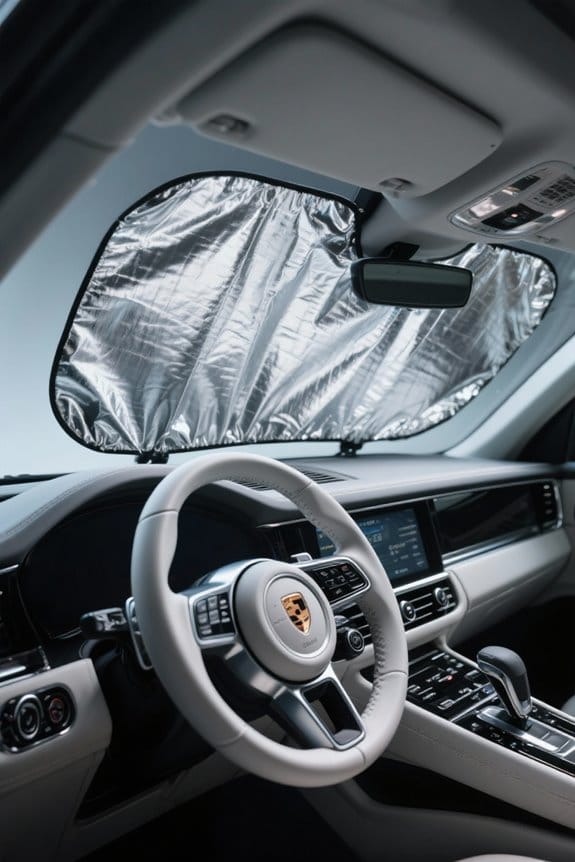
The Science of Heat Transfer in Parked Vehicles

Sunlight turns a parked car into a small greenhouse fast. Temperatures can jump from 25°C to 60°C in an hour. Dark paint makes cabins ~20–25% hotter. Dash surfaces can hit 75°C. A $15 reflective sunshade cuts peak air temps by about 10–15°C and dashboard heat by ~26%. Sensors show roofs and glass conduct heat inward like hot spoons. Want step‑by‑step fixes and test data to protect people and gadgets?
Key Takeaways
- Solar radiation passes through glass, trapping infrared heat and raising cabin air and surface temperatures via a greenhouse effect.
- Conduction moves heat through metal, glass, and seats, quickly warming interior surfaces in direct sunlight.
- Convection circulates heated air upward toward the roof, creating hot zones and uneven cabin temperature distribution.
- Dark paints and interior materials absorb more solar energy, increasing interior temperatures compared with light or reflective surfaces.
- Sunshades, reflective coatings, and ventilation significantly reduce peak temperatures and lower VOC off‑gassing and heat damage.
Physical Mechanisms of Heat Gain in Parked Cars
You may be interested


Even on a mild 31.5°C day, a parked car can become a small oven. Readers learn that cabin temperature often climbs to 43.3°C, and surfaces may reach 63°C. Solar radiation drives this rise. The greenhouse effect traps shortwave light, causing heat accumulation under the dashboard and rear windshield. Thermal conduction moves warmth through metal and glass. Convection circulates hot air to the roof. Vehicles with open ventilation slots show slower heat gain; sealed cabins spike faster. Tester Maria joked, “It’s like a cheap toaster for your lunch,” noting a $25 sunshade cut peak temps by several degrees. Want numbers? Expect interior air 30–40% hotter than ambient within minutes. Practical? Park shaded or use vents wisely. Dual-layer UV protection sunshades and reflective materials can further reduce interior temperatures and protect upholstery.
Recommended Products

VERSATILE JOGGING STROLLER: The BOB Gear Revolution Flex 3.0 Jogging Stroller offers comfort and versatility
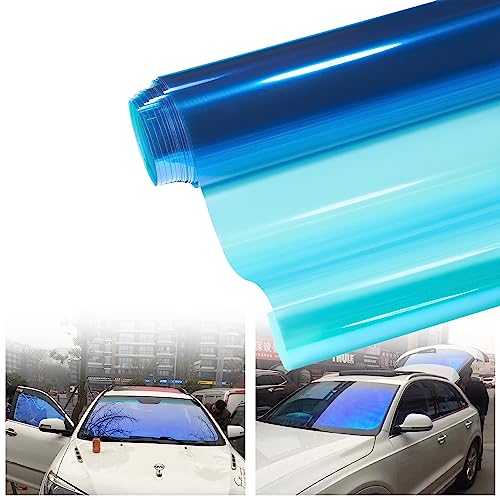
【Color Change Effect】Chameleon window films change colors when viewed from different angles and the transmitted colors are different from the reflective colors, especially in the sun, it will be very dazzling

XR anti-reflective coatings team up with XD extra-low dispersion glass for images that are bright, crisp, and sharp
Role of Vehicle Materials and Color in Thermal Response

After solar radiation and trapped heat have baked the cabin, what matters next is what the car is made of and what color it wears. Vehicle materials determine thermal response. Dark-colored vehicles can run 20–25% hotter than light-colored vehicles under sun. Interior textiles like synthetic fabrics, vinyl, and leather soak up heat and stay warm. Thermal conductivity and specific heat capacity govern heat transfer rates through panels and seats. Want numbers? A $40 heat-reflective coating kit can cut surface temperature by 10–15°C in tests. Window films priced $50–$200 also help. Practical tip: lighter paint and reflective wraps reduce cabin temperatures considerably. That improves passenger comfort and preserves upholstery. Who wouldn’t want cooler seats after a parking lot roast? Testers nod, smiling. High-density Oxford cloth covers can also help protect against heat and weather when parked windshields and side mirrors.
Effects of Parking Orientation and Environment on Cabin Temperatures
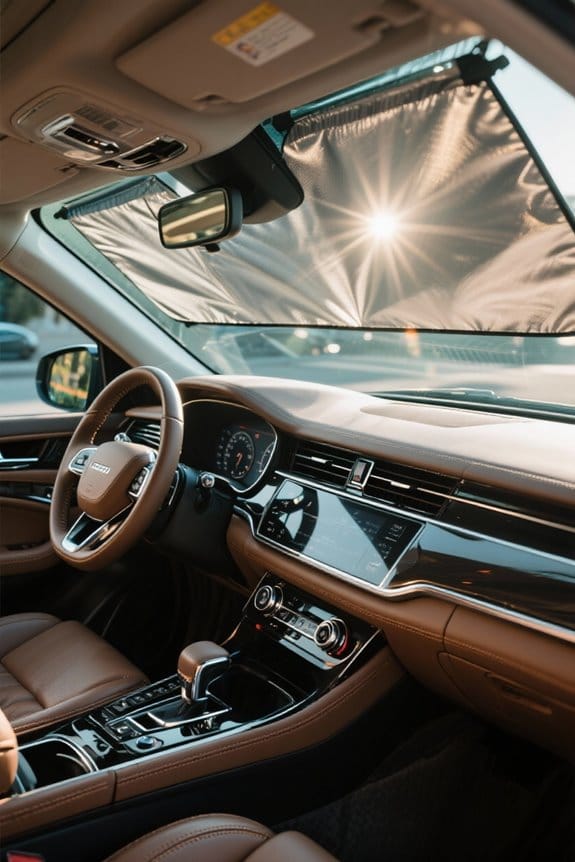
Frequently, where a car is pointed makes a huge difference in how hot it gets inside. A parked vehicle facing direct sunlight shows rapid heat accumulation. Dashboard surfaces hit about 75°C in sealed windows scenarios. Cabin air can climb to levels exceeding 60% above ambient temperature, risky for pets and people. Use a sunshade — a $15–$40 reflective model cuts dashboard temperature ~26% and lowers peak air temperature ~27%. Thermal radiation from glass drives much of the warming, while conduction and convection move heat through seats and vents. Where you park matters: shade or a covered spot improves comfort like an instant umbrella. Want a quick win? Try a sunshade and aim the car away from direct sunlight. Testers joked it felt like “parking in a toaster.” A high-quality mesh or reflective sunshade can block up to 99% UV and significantly reduce interior heat buildup.
Recommended Products

IMPORTANT INFORMATION: The second image is a template of what you will receive. If unsure or if it looks wrong please initially contact us. These blinds are compatible/replacement for Peugeot Expert Tepee (2007-2016) Full Set and consists of 10 Blinds. PLEASE READ THE ITEM DESCRIPTION FOR A GLOSSARY OF TERMS THAT WILL ENSURE YOU BUY THE CORRECT ITEM
These blinds will fit Peugeot Partner Teepee (2008 2018) These blinds come with a cut out for rear view mirror. Set consists of 8 blinds and 42 suction cups. Blinds will be exactly as per the main image. Blinds are silver on one side and grey on other

These blinds will fit Mercedes Sprinter (2006 2019) Long Wheel Base. Full Set .With Cutout For Rear View Mirror. Set consists of 7 blinds and 15 Suction Cups. Blinds will be exactly as per the main image. Blinds are Silver on one side and Black on other
Measurement Techniques and Experimental Setups for Cabin Heat Analysis
Where a car points affects cabin heat, but measuring that heat needs method and care. The team used thermocouple sensors at 12 spots to map temperature distribution. A 20-channel data logger (about $400) recorded peaks up to 63°C air and 75°C dashboard. Experimental setups compared closed windows, partly open, and sunshades. Sunshades cut dashboard temps to ~50°C — simple heat management strategies that work. Measurement techniques combined field tests and CFD simulations with FLUENT to study thermal accumulation and airflow. Want to reproduce this? Expect to spend roughly $600–$1,000 on probes and logging gear. Testers joked, “It’s like baking cookies inside.” Readers learn clear cabin heat analysis steps, plus why temperature regulation matters for safety and energy recovery. Many effective sunshades provide high UV protection, with some blocking up to 99% of UV to reduce heat and protect interiors.
Thermal Modeling and Simulation Approaches for Parked Vehicles
Thermal modeling for parked vehicles combines hands-on measurements with computer simulations to predict how hot a cabin will get under real sun. CFD simulation is used to map temperature distribution and pinpoint heat accumulation spots. Models use boundary conditions like solar flux, exterior temp, and window angles. Simulations show upper cabins peaking near 75°C with closed windows. Computational simulation also captures natural circulation and turbulent flow. Designers tweak air supply volume and pre-ventilation strategies in models to improve passenger comfort. One tester joked, “It’s like an oven with cup holders.” A prototype costs about $5,000 for sensor kits and software. Want usable results fast? Run short, focused cases first and validate with a few on-car measurements. Using reflective sun shades can significantly reduce cabin temperatures by blocking solar radiation with reflective polyester materials.
Strategies for Passive and Active Cabin Cooling
Although parked cars can feel like ovens, simple strategies cut peak heat dramatically. Passive cooling works: reflective sunshades ($15–$40) can lower dash temps ~26% and cabin air ~27%. Natural circulation alone concentrates heat accumulation near the ceiling by thermal convection. Open a window slightly or adjust visors to break that dome of hot air. Pre-ventilation with a timed fan shows clear gains. Supply volume and angle matter for airflow distribution; testers noted a cool front-seat breeze like a desk fan. Active cooling systems include solar-powered ventilation units ($30–$120) that pre-cool before entry. Want a stronger option? Combine reflective shades, pre-ventilation settings, and a solar fan. The result: better thermal comfort and fewer “car oven” moments. Custom-fit sunshades designed for specific models like the Hyundai Kona can improve coverage and cooling effectiveness custom-fit design.
Recommended Products

This Product Adds A Great Value

MPPT Solar Power: Is your attic getting too hot? The 35W MPPT controller maximizes sunlight to extract hot air from the attic, with a cooling capacity of up to 2400 CFM. Our solar attic fan can significantly reduce your cooling costs and is suitable for metal and masonry roofs
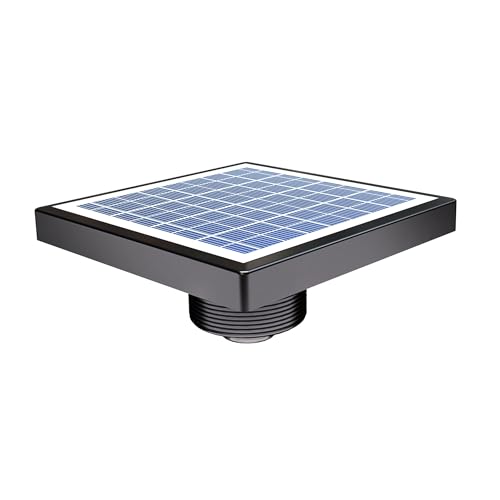
3.5-Watt polycrystalline solar panel
Waste Heat Recovery Opportunities and Applications
Picture a parking lot as a quiet power plant. Waste heat recovery in parked vehicles can yield about 500 W per car. That adds up: 300 cars give roughly 97 kWh daily, enough to heat 4,000 L of water from 20°C to 40°C. V6 engines run hotter (≈54°C) than V4s (≈40°C), so energy recovery potential varies. Finned-tube cross-flow heat exchangers capture thermal energy efficiently. Imagine inexpensive 1 m² exchanger panels at $150 each collecting cabin and engine heat. What could you do with the warmth? Heating applications in nearby buildings are obvious. The Lebanese International University case shows economic feasibility and urban energy management gains. It’s practical, sustainable, and a small win for broader sustainability efforts. Who wouldn’t like free hot water? A practical implementation could be enhanced by using reflective sun shades to reduce cabin heat losses and improve collection efficiency.
Health, Safety, and Material Degradation From Elevated Cabin Temperatures
When a car sits baking in the sun, its cabin can become a small, dangerous oven. Elevated cabin temperatures sometimes top ambient by 63°C, so heat accumulation risks heatstroke and lowers comfort level fast. The dashboard surface temperature can hit 75°C, frying plastics and aging interior materials. VOCs — volatile organic compounds — off-gas from vinyl and leather, causing measurable health effects. Want a fix? A $15 sunshade can cut max air temps by ~27%. Thermal transfer from glass and seats matters. Tester Mark joked, “Feels like a toaster with cup holders.” But this is serious: occupant safety and electronics longevity suffer. Simple steps save dollars and wellbeing. Who wouldn’t pick a shade over a scalded steering wheel? Custom-designed sunshades provide the best fit for Tesla Model Y and Model 3, ensuring a snug fit and eliminating awkward gaps for improved heat reduction with tailored fit.
Recommended Products
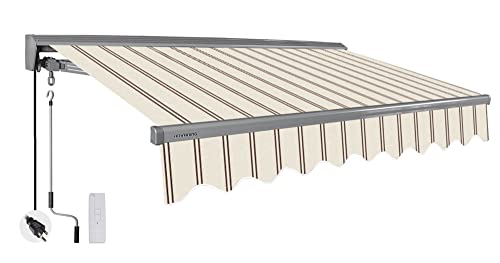
𝗖𝗢𝗟𝗢𝗥 & 𝗦𝗜𝗭𝗘: Classic Series Features a Gray Frame, Fabric Color: Natural Beige with Brick Red Stripes, Size: 13' Wide x 10' Projection Full Extension. Advaning Awnings are 100% Fully Pre-Assembled and Ready for Installation.

【𝗛𝗘𝗔𝗩𝗬 𝗗𝗨𝗧𝗬】: our super ring shade sail exact 260 GSM permeable extra fabric, stainless mounting super rings, edges with cable wires built-in, integrate into the mounting rings, all pulling strength goes to the cable wires, making the edges more durable
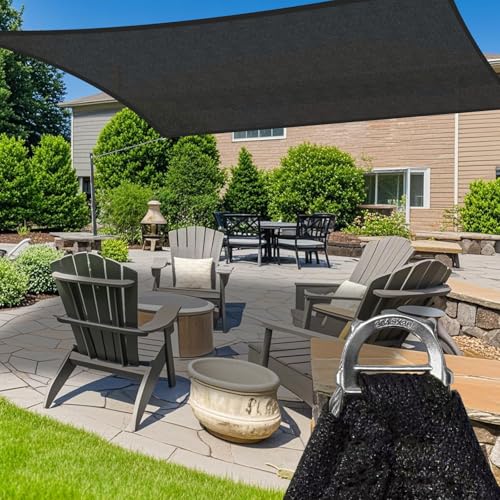
Reinforced Cable-Edge Design - Built for maximum durability, our sunshade features a full-perimeter cable wire system (not just at the corners), ensuring even tension, long-term shape retention, and superior edge strength
Frequently Asked Questions
Why Do Parked Cars Get so Hot?
Parked cars heat because sunlight absorption through glass and interior materials, plus thermal radiation and heat retention, overwhelm ventilation effectiveness; windshield reflectivity, color influence, shade impact, roof designs and insulation levels determine how rapidly interiors warm.
How Hot Does It Get in a Parked Car?
Car interior temperature can exceed 60°C in strong sunlight. Heat absorption factors like dark color heating, car material influence, windshield angle effect, sunlight exposure effects, ventilation impact and climatic conditions role affect temperature recovery rate and safety risks involved.
How Hot Does the Inside of a Car Get When It’s 90 Outside?
About 130°F (54°C) or higher: interior temperature rises rapidly due to heat absorption from sunlight exposure, influenced by vehicle materials, dark colored cars, poor thermal insulation and limited air circulation; windshield shade and heat reflection reduce risk—heat warning issued.
How to Keep Your Car Cool While Parked in the Sun?
Cabin temperatures can exceed ambient by over 60%; one should use sunshades benefits, windshield screens, reflective covers and insulated covers, choose shaded parking location, cracked windows, tinted windows, car ventilation, cooling seat cushions and heat resistant gear.


