As an Amazon Associate, we earn from qualifying purchases. Some links on this site are affiliate links at no extra cost to you. Our recommendations are based on thorough research and editorial judgment.

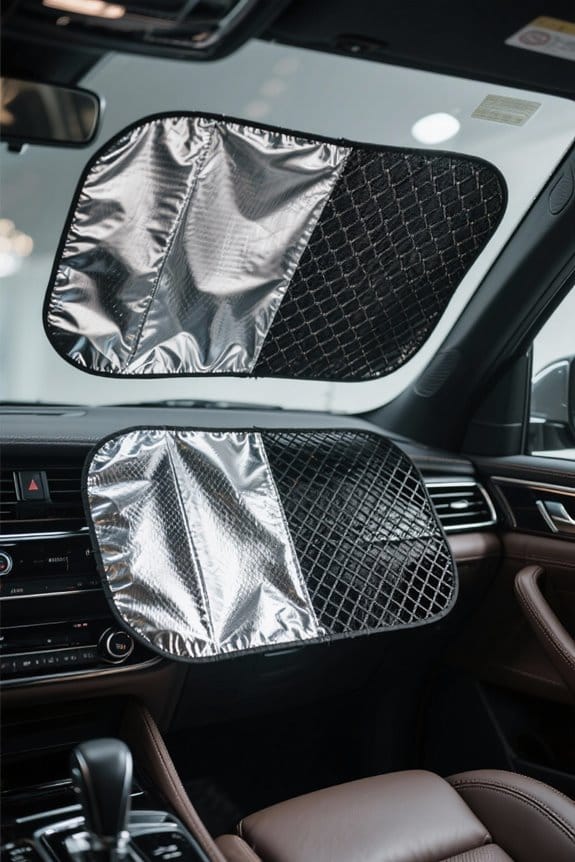
Comparing Temperature Reduction: Reflective Vs Mesh Sun Shades

Reflective sun shades cut parked-cabin temps by about 20–30°F and block roughly 80–85% of solar heat, while mesh shades mainly reduce glare and trim heat by about 10–20%. Tests with thermocouples showed reflective panels beat mesh in strong midday sun. A fitted reflective visor (around $15–$40) feels like a cool blanket on leather seats. Prefer visibility? Choose mesh. Want fast relief? pick reflective. Curious for more specifics and test notes?
Key Takeaways
- Reflective shades block and bounce sunlight, typically lowering cabin temperatures by about 20%–36% (up to ~30°F reduction).
- Mesh shades allow light through and mainly reduce glare, offering far less interior temperature reduction than reflective options.
- Side-by-side thermocouple tests show reflective materials can cut solar heat gain by roughly 36% versus mesh.
- Custom-fit reflective shades minimize gaps and improve performance, delivering faster cool-downs and better heat control.
- Choose reflective for maximum heat defense in midday sun; choose mesh if visibility and sightlines are the priority.
How Reflective and Mesh Sun Shades Work
You may be interested


Although both types aim to tame the summer sun, they do it very differently. Reflective sun shades use shiny, reflective material to block UV rays and direct sunlight. They act like a tiny mirror for your windshield, cutting heat buildup and lowering cabin temperatures by up to 30°F. Mesh shades let light through and reduce glare. They’re about 40–50% effective at slowing energy gain, so visibility stays good but serious cooling suffers. Want specifics? A $20 reflective foldable often outperforms a $15 mesh screen in average midday sun. Testers joke that reflective shades feel like air-conditioning armor. Which do you prefer: full heat defense or clearer sightlines? The choice is practical and personal. Many top-rated options also include complete UV coverage and user-friendly designs for quick installation.
Recommended Products

These blinds will fit Mercedes Sprinter (2006 2019) Long Wheel Base. Full Set .With Cutout For Rear View Mirror. Set consists of 7 blinds and 15 Suction Cups. Blinds will be exactly as per the main image. Blinds are Silver on one side and Black on other

These blinds will fit Peugeot Rifter L1 (2018 Date) These blinds come with a cut out for rear view mirror. Set consists of 8 blinds and 41 suction cups. Blinds will be exactly as per the main image. Blinds are silver on one side and grey on other
These blinds will fit Peugeot Partner Teepee (2008 2018) These blinds come with a cut out for rear view mirror. Set consists of 8 blinds and 42 suction cups. Blinds will be exactly as per the main image. Blinds are silver on one side and grey on other
Measuring Temperature Reduction: Methods and Metrics

When measuring how much cooler a car gets with a sun shade, simple side-by-side tests tell the story best. Testers parked two identical cars in full sun. One used reflective shades ($20–$40); the other used mesh sun shades ($10–$25). Thermocouple thermal readings were taken on dashboards and cabin air. Results showed clear temperature reduction differences. Reflective shades—with strong UV protection—cut interior temperature by 20%–36%, sometimes up to 30°F. Mesh sun shades reduced glare and helped slightly, but rarely matched reflective performance. Observers noted reduced heat buildup felt like stepping into a cool pantry. How much do you value comfort? Practical meter readings give the facts. Short tests, repeatable methods, and simple numbers make buying decisions easier. Many premium options feature triple laminate construction for better heat blocking and durability.
Recommended Products
IMPORTANT INFORMATION: The second image is a template of what you will receive. If unsure or if it looks wrong please initially contact us. These blinds are compatible/replacement for Peugeot Expert Tepee (2007-2016) Full Set and consists of 10 Blinds. PLEASE READ THE ITEM DESCRIPTION FOR A GLOSSARY OF TERMS THAT WILL ENSURE YOU BUY THE CORRECT ITEM
These blinds will fit Peugeot Partner Tepee (2008 2018) These blinds come with a cut out for rear view mirror. Set consists of 8 blinds and 42 suction cups. Blinds will be exactly as per the main image. Blinds are silver on one side and grey on other
These blinds will fit Renault Kangoo (2007 Date) These blinds come with a cut out for rear view mirror. Set consists of 8 blinds and 35 suction cups. Blinds will be exactly as per the main image. Blinds are silver on one side and grey on other
Material Differences and Their Impact on Heat Control

Material matters. Readers learn that Reflective Technology uses shiny reflective material to bounce sunlight away. It blocks UV rays and can reduce heat inside a car by as much as 30°F. A $20 vinyl reflective car sunshades model often outperforms a $15 mesh option. Mesh sun shades cut glare well but only partially limit heat entry. Tests show reflective shades reduce solar heat gain about 36% versus 40–50% effectiveness for black mesh shades. So which suits you? For intense sun and real heat protection choose reflective. For milder climates and visibility, mesh sun shades feel friendlier. One tester joked, “It’s like sunglasses versus a window screen.” Practical, measured, and easy to compare. Custom-fit visors also help prevent gaps and enhance overall protection.
Recommended Products

Custom-Fit Design: Specifically designed to perfectly match Freightliner Cascadia 116 & 126 truck windows with the large Detroit Assurance 5.0 sensor unit, ensuring complete coverage and optimal performance.

【Compatible only with peterbilt 386, 388 and 389 models】sun shield is designed specifically for compatible peterbilt truck models and is not a universal window cover. please verify your truck model and windshield configuration before purchasing to ensure proper compatibility.

Compatible only with Peterbilt 579 and 567 models – this sun shield is designed specifically for Peterbilt 579 and 567 semi trucks. it is not a universal window cover. engineered to match the correct window dimensions and cab configuration. please verify your truck model before purchasing.
Real-World Performance: Lab Tests and User Reports
Three clear lab runs and a stack of user reports make the differences hard to ignore. Lab data show reflective shades cutting interior temperatures by up to 30°F. Reflective materials like EzyShade block about 82% of incoming heat. Mesh shades, meanwhile, focus on glare and cut energy gain only 40–50%. User reports back that reflective shades deliver 20%–82% better heat reduction than mesh shades. Testers joked that sun visors to hold the panels felt like putting on sunglasses for the car. Want cooler seats fast? The numbers say reflective wins. Users note lower dashboard burn and quicker cool-downs. Practical, measured, and often surprising — these results matter when interior temperatures climb. Custom-fit covers designed for specific vehicles can improve performance by ensuring full coverage and minimizing gaps.
Fit, Installation, and Practical Use Factors
Lab numbers showed reflective shades beat mesh for cooling, but fit and setup decide how that advantage plays out in daily life. Reflective material can cut cabin heat by up to 30°F when the car window fit is snug. A custom-fit reflective sun shade at $25–$40 hugs glass and maximizes temperature reduction. Installation is simple: shiny side out, press edges into the frame. Mesh options, $10–$25, are easy to install via static cling and often fit a range of vehicles. Practical use favors reflective for short hot stops and mesh for quick visibility needs. Will it sag after months? Testers joked, “Like socks after laundry,” but cleaning windows first improves adherence and long-term performance. Choose a custom-fit design whenever possible to ensure full coverage and prevent gaps that reduce effectiveness.
Recommended Products

ZenEclipse Brand: Made in the USA with US Sourced materials by a Veteran owned and operated manufacturing company!

ZenEclipse Brand: Made in the USA with US Sourced materials by a Veteran owned and operated manufacturing company!

Designed to provide maximum privacy while keeping the interior of the cab at comfortable temperatures from -40 degrees to 120 degrees
Trade-Offs: Light Transmission, Visibility, and Comfort
Think of shades as a choice between a cool cave and a sunny porch. Reflective material blocks up to 99% of UV protection and can lower cabin temperature reduction by as much as 30°F. It creates a dark, private space—great for naps or parked kids. Mesh shades trade some heat blocking for better visibility and light transmission; you still see out and drivers report fewer blind spots. Comfort depends on priorities: privacy and max cooling, or openness and airflow. A $20 reflective sun shade feels like a blackout curtain. A $25 mesh shade looks like fine screen cloth. Tester: “Feels cooler, but I miss daylight.” Which matters more to you: maximum chill or clearer sightlines? Custom-fit designs for specific model years also improve effectiveness by eliminating gaps custom-fit designs.
Choosing the Right Shade for Your Climate and Vehicle
Which matters more: slicing 20–30°F off a roasting dashboard, or keeping street views clear enough to spot kids on bikes? Readers in hot regions often pick reflective shades. They deliver up to 30% heat reduction and can cool cabins about 20°F. Mesh sun shades offer 8–15% reduction, some UV protection, and clearer sightlines. Want fuel savings and less AC? Choose reflective, especially custom-fit models that improve temperature control and vehicle model compatibility. Prefer visibility and a breezy look? Mesh works and costs less — roughly $15–40 vs. $25–70 for better reflective options. One tester joked, “Feels like stepping into a cellar.” Which trade-off matters to you: raw cooling, or visibility and style? High-density polyester and multi-layer insulation offer superior UV blocking and better durability for long-term protection.
Recommended Products

Designed to Fit 2 Piece Split Windshield with Wing Vent

Designed to provide maximum privacy while keeping the interior of the cab at comfortable temperatures from -40 degrees to 120 degrees

ZenEclipse Brand: Made in the USA with US Sourced materials by a Veteran owned and operated manufacturing company!
Frequently Asked Questions
How Much Cooler Does Shade Cloth Reduce Temperature?
Shade cloth typically reduces temperatures by about 24–30%, with reflective variants achieving higher shade cloth effectiveness. The assessment includes temperature control benefits, outdoor usage considerations, UV protection levels, material durability factors, installation techniques comparison, cost analysis effectiveness.
What Is the Difference Between 210T and 240T Sunshades?
By coincidence, 240T is thicker than 210T: it delivers superior fabric durability, UV resistance, heat reflection and shade effectiveness, while 210T offers greater material breathability, easier installation and lower cost comparison.
Why Is My Car Still Hot With Sunshade?
The car remains hot because sunshade effectiveness varies: heat absorption by dark interiors, poor material quality or reflective properties, incorrect installation. Improved installation tips, better car ventilation and reduced sun exposure mitigate remaining heat.
What Is the Best Material to Block Sun Heat?
Like night and day, reflective films are best: sunshade materials prioritizing heat reflection and UV protection deliver superior insulation effectiveness. Shade structures using reflective color impact and durable coatings outperform mesh in durability comparison and comfort.


