As an Amazon Associate, we earn from qualifying purchases. Some links on this site are affiliate links at no extra cost to you. Our recommendations are based on thorough research and editorial judgment.


How Much Heat Can a Windshield Sun Shade Actually Block?

A good reflective windshield sun shade can cut incoming UV and infrared and typically cools a parked car by about 15–20°F. High-end custom-fit shades ($25–$70) and multi-layer reflective models can push that toward 30–40°F in strong sun. Think of it as holding up a giant mirror to the sky. They won’t run the air conditioning for you, but they save dash and interior heat. Want the specifics on types, fit, and best buys?
Key Takeaways
- Reflective windshield shades can lower cabin temperatures by about 15–20°F compared to no shade.
- High-quality, multi-layer or custom-fit shades can sometimes reduce interior heat by up to 40°F in extreme conditions.
- Reflective materials block up to 99% of UV and significantly reduce infrared solar gain when properly installed.
- A snug, gap-free fit is crucial; custom-fit shades outperform generic models by minimizing heat leakage.
- Shades don’t actively cool; they reduce incoming solar radiation but effectiveness drops if side windows remain uncovered.
How Windshield Sun Shades Work to Reflect Heat and UV
You may be interested


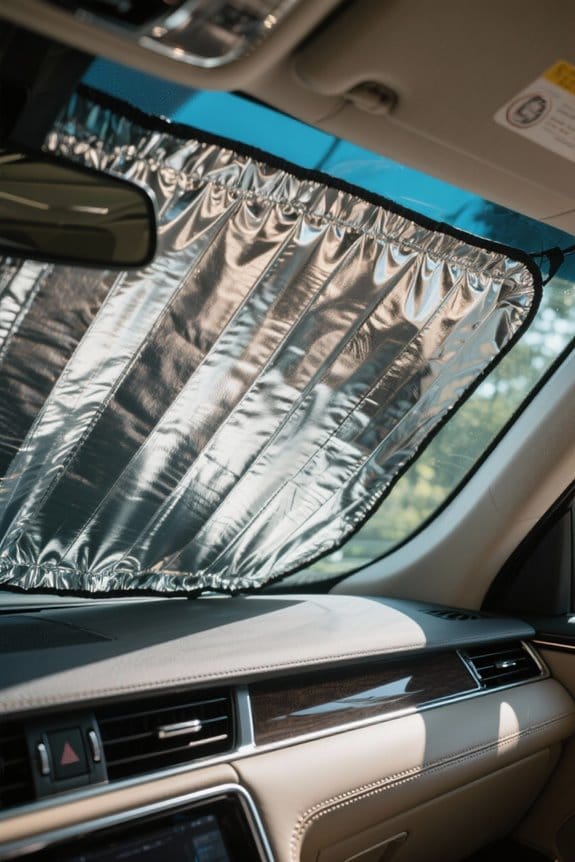
A good windshield sun shade works like a silver umbrella for your car. It reflects solar radiation, cutting UV and infrared before they enter the cabin. Tests show cabin temps drop 15–20°F with a proper shade versus none. Materials matter: reflective metal layers block more UV Protection and radiant heat than plain fabric. Fit counts too; tailored shades that match windshield dimensions leave fewer gaps. Practical price ranges run $15 for basic fits to $60 for custom, high-reflectivity models. Want reduced heat and less A/C use? Slide one in and feel the difference. “It’s like popping a cool hat on the dash,” a tester joked. Who hates hot steering wheels anyway? Many custom-fit shades for specific models, like the Acura RDX, are designed to prevent light leakage and improve overall effectiveness custom-fit designs.
Types of Windshield Sun Shades and Their Performance
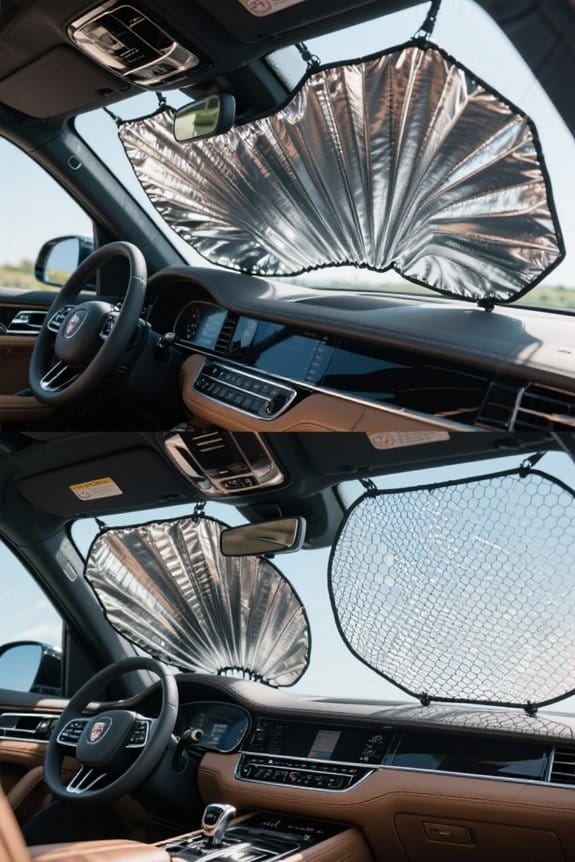
When parked under a blazing sun, a convenient windshield shade can feel like a sunscreen for the whole car. Reflective shades block up to 99% of UV. They look like foil and cost $10–$30. Accordion and roll-up shades fold small for storage. They’re $8–$25 and sometimes fit poorly, leaving gaps. Custom-fit shades give edge-to-edge coverage. Many testers note a snug fit and up to 40°F potential cooling; prices run $25–$80. Pop-up shades spring open fast and are $12–$35. They’re handy but less durable, one reviewer joked they age like gym socks. Overall performance depends on material quality and how tightly shades contact glass. Want reliability? Choose fit and thicker reflective layers. High-quality shades often use layered constructions and UV-resistant fabrics for better thermal insulation and longer-lasting protection.
Recommended Products

2X Heat Blocking with Double-Layer Design: Unlike standard single-layer sunshades, Magnelex uses dual 240T reflective layers for superior heat rejection and UV protection. Stay cooler, protect your interior, and feel the difference every time you enter your car.

Enhanced Sun Protection: Shield your vehicle from harmful UV rays with EcoNour windshield sunshade and car window shades. Made from premium 240T polyester, this car sun shade windshield acts as a sun shade protector, blocking heat to keep your dashboard, seats, and interior cooler. A reliable sun visor for car windshield and sun cover for car windshield for everyday driving.

2X Heat Blocking with Double-Layer Design: Unlike standard single-layer sunshades, Magnelex uses dual 240T reflective layers for superior heat rejection and UV protection. Stay cooler, protect your interior, and feel the difference every time you enter your car.
How Much Temperature Reduction Can You Expect?
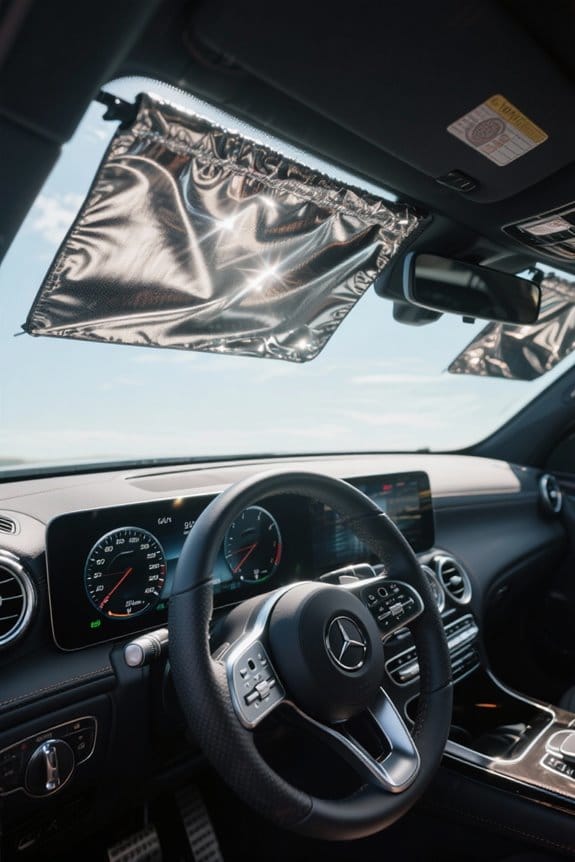
How much cooler can a car feel after parking under a noon sun? A windshield sun shade commonly drops the temperature inside by 15 to 20°F versus no shade, making the car cooler and less hostile on entry. In heatwaves, testers report up to 40°F reduction in extreme conditions — dramatic, like stepping into an air-conditioned oasis. Reflective shades and snug, custom-fit models perform best at minimizing infrared gain. Combine a shade with UV-blocking tint and you gain further control. Prices vary: basic shades start near $10, while higher-quality, custom-fit options run $30–$60. Curious which feels right? Try a $25 reflective tester model; many drivers call it “surprisingly effective,” and one joked it’s like parking under a polite, sun-blocking umbrella. Upgraded materials like 240T or 250T fabric can improve durability and UV protection for longer-lasting performance.
Materials That Make the Biggest Difference
Think of the right material as the difference between a cheap napkin and a proper oven mitt for your dashboard. High-quality shades use reflective materials and metallic coatings that can block up to 99% of UV protection needs and send sunlight back outside. Multi-layered fabrics add insulation, cutting cabin heat by 10–20°F compared with basic liners. One tester noted, “It felt like opening a cooler, not a car oven.” Prices run from $15 for simple reflective panels to $40–80 for thicker, coated designs. Good UV protection lengthens dash life and keeps electronics cooler. Want measurable gains? Look for metallic-coated, multi-layer builds and labeled UV ratings. Small choices in material yield the biggest comfort and preservation payoff. Many popular windshield covers also include anti-theft features like mirror straps and window flaps to improve security and stability in windy conditions.
Recommended Products

Superior Heat & UV Protection: Keep your vehicle cool with the EcoNour windshield sunshade. This premium car sun shade windshield blocks harmful UV rays and heat, acting as a reliable sun shade protector and sun blocker for car windshield to help protect your dashboard, seats, and interior from sun damage.

Protects Your Car Interiors: EcoNour’s car window shades act as a reliable window sun blocker, protecting your dashboard, seats, and other interior accessories from harmful UV rays. This durable heat shield automotive ensures long-lasting protection and is super convenient to use.

Ultimate Sun Protection with Accordion Design: EcoNour Accordion Car Windshield Sun Shade is engineered with a reflective aluminum foil surface that acts as a powerful sun blocker for car windshields. This accordion sunshade for car windshield offers maximum UV ray protection, helping prevent dashboard fading, cracking, and heat buildup.
Fit and Installation: Why Size Matters
Because a shade that gaps like a loose curtain can’t stop the sun, fit matters as much as material. A snug, custom-fit sun shade will sit flush against the glass, blocking UV and infrared more effectively. Buyers report model-specific shades cut interior heat by up to 40°F in extreme sun. Generic, one-size shades often leave 2–4 inch gaps at the edges. That sounds small, but sunlight sneaks through and raises cabin temperature fast. Installation is simple: reflective side out, press firmly into corners, secure with visors or clips. Expect to pay $25–$70 for a tailored fit versus $10–$20 for a generic. Want cool seats and a happy dash? Invest in proper fit, install carefully, and check for any stray light. Many premium options feature triple laminate construction for superior insulation and durability.
Recommended Products
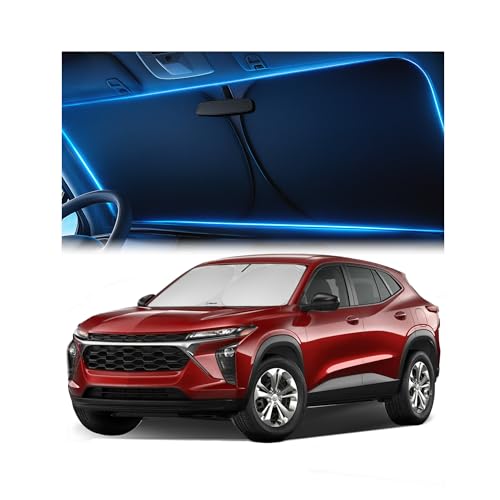
Custom Fit Windshield Sun Shade for Chevrolet Trax: shaped exclusively for the Chevrolet Trax 2024 2025 2026 with a rearview mirror cut-out that closes gaps for a slip-free, full-coverage front window sun shade

Custom Fit for Toyota Tacoma 2016 - 2026 Windshield Sun Shade: Precisely designed windshield sunshade fit for Toyota Tacoma 2016, 2017, 2018, 2019, 2020, 2021, 2022, 2023, 2024, 2025 and 2026 to provide full windshield coverage with 100% light blocker.
![[2026 Upgraded] DooGooCoo Windshield Sun Shade for RAM 1500 2500 3500 2019-2025 2026 [Cooling Ice-Crystal, 100% Sun Block] Car Sun Shade Windshield for Truck RAM 1500 Sun Shade, Custom for RAM Front.](https://m.media-amazon.com/images/I/51IIOqADNYL._SL500_.jpg)
【Precision Fit for RAM 1500 2019-2026】Custom-fit car windshield sun shade designed for RAM 1500 model 2019 2020 2021 2022 2023 2024 2025 2026,offering full coverage as a dependable car sun shade windshield.
Measuring Effectiveness: Tests and Real-World Results
One quick test often tells the story: park a car with no shade for an hour, then repeat with a fitted sun shade and compare. Testers saw interior temps drop 15–20°F with a quality shade. A sun shade that reflects 80% of solar radiation feels like an instant cool blanket. UV exposure inside fell as much as 99%, protecting dashboards and seats. In hot climates, vehicles with good shades used 30–40% less cooling energy. Materials and fit mattered most; custom-fit models outperformed generic ones. Prices ranged from $15 for basic pop-ups to $60 for tailored heat- and UV-blocking panels. Want measurable relief? Try one and watch the dash stop sizzling like a skillet. Custom-fit shades also tend to provide better coverage and cooler interiors than universal options.
Sun Shades vs. Window Tinting: Complementary Solutions
Two familiar tools tackle heat and UV in different ways, and together they make a reliable team. Sun shades actually work, dropping cabin temps 15–20°F when parked. They rely on reflective layers and a snug fit. Window tinting adds ongoing UV protection, blocking up to 99% of harmful rays and cutting glare while driving. Combine both for better comfort: a $20 foldable shade plus a $200–$400 tint job yields measurable gains. Think of the shade as an umbrella and tint as sunscreen. Want cooler starts and less sun-fade? Use both. Testers joke that the dash smiles more. Practical readers get clear benefits: lower heat, less UV damage, and more comfortable commutes without complicated installs or big price tags. Many custom-fit sun visors for vehicles like the Acura RDX offer multi-layer construction for enhanced insulation and UV blocking.
Recommended Products

Material Upgrade: The new windshield sunshade for 2026 provides more sun protection and shade. We abandoned the old-fashioned titanium silver coating design and chose 300T Oxford cloth with higher density as the raw material for the sunshade. It can effectively block sunlight and heat, allowing you to enjoy the coolness and tranquility inside the car in the scorching summer.

【Vehicle Specific Windshield Sun Shade】our car windshield sun shade is specially designed for 2011 2012 2013 2014 2015 2016 2017 2018 2019 2020 Toyota Sienna accessories windshield, designed to protect your car interior from excessive heat and sunlight when parked, keep your car cool.

Custom Fit Windshield Sun Shade for Chevrolet Silverado 1500, 2500HD, 3500HD & GMC Sierra: shaped exclusively for the Chevrolet Silverado 1500, 2500HD, 3500HD & GMC Sierra 2014–2018 with a rearview mirror cut-out that closes gaps for a slip-free, full-coverage front window sun shade
Benefits Beyond Cooling: Protecting Your Interior
How much does a sun shade actually save the inside of a car? A quality shade can block up to 99% of UV rays and cut interior heat by 15–20°F. That reduces dashboard fading, cracking, and upholstery breakdown. Think of it as sunscreen for leather and plastic. For $10–$50, drivers get measurable protecting your interior benefits and preserved resale value. It also prevents glare on screens and dashboards, improving safety. Testers joked, “It’s like giving the car a cool hat.” Need proof? Reduced UV exposure extends material life and keeps electronics from baking. So if you care about looks and longevity, a sun shade is a small buy with clear, data-backed payoffs. Many vehicle owners also choose custom-fit covers for even better protection against frost, hail, and UV damage.
Limitations of Sun Shades and Common Misconceptions
Although a sun shade can feel like a cooling blanket, it won’t turn a parked car into an oasis. Readers should grasp the limitations of sun shades: they cut cabin temps roughly 15–20°F versus no shade, but they don’t actively cool. A well-fit, $20–$50 custom shade outperforms a $5 generic. Some models advertise UV protection, yet many still let infrared heat in, which fries dashboards and fades leather. Improper installation or uncovered side windows defeat the purpose. Think of a shade as an umbrella, not an air conditioner. Want a cooler start? Combine a good shade with ventilation or a fan. Tester quote: “It helps, but it’s not magic,” says one reviewer, shaking a sun-warmed steering wheel. For best results choose shades made from durable materials like 250T polyester that offer superior heat resistance and longevity.
Best Practices for Using and Maintaining Your Sun Shade
Having seen that a sun shade trims cabin heat by about 15–20°F but doesn’t cool, readers should learn how to get the most from one. Best practices start with the reflective side outward; that silver face blocks radiant heat and UV like a tiny mirror. Check fit often; a snug 1–2 cm seal matters. Clean it monthly—mild soap and a soft cloth—since dirt cuts reflectivity. Store flat or rolled, not crumpled, to avoid creases that dent performance. Pair with aftermarket UV window tint (ask pros; $100–$300) for better results. Tester note: “It’s like wearing sunglasses for your dash,” one reviewer joked. Maintaining your sun shade is simple care that keeps interiors cooler and trim protected. Also consider choosing multi-layered or reflective fabrics to maximize durability and heat reflection.
Special Considerations for Electric and Hybrid Vehicles
Electric owners’ dashboards can feel like a skillet in summer. Owners of EV and hybrid car models must take extra care, since heat harms batteries and sensitive electronics. A quality sunshade cuts cabin temps 10–20°F, lowering HVAC draw and preserving range. Imagine parking for two hours: interior falls by about 15°F with a reflective shade priced $20–60. Proper UV blocking also slows cracking of dashboards and wiring insulation. Fit matters. A custom-fit shade seals edges; generic ones leave gaps and lose effectiveness. Think of it as sunscreen for your car. Who wants reduced range on a hot afternoon? Testers note a snug $35 neoprene-backed model performed best. Small steps like this protect performance and extend vehicle lifespan.
Choosing the Right Sun Shade for Your Climate and Vehicle
Pick a shade that matches both your climate and the car’s measurements. In hot regions, a reflective sunshade that claims up to 99% UV protection is smart. Measure windshield width and height; custom-fit shades (about $25–$60) cut gaps and block more sun. Reflective metallic layers bounce heat, lowering cabin temps noticeably compared with fabric models. Park often? Choose durable shades with firm frames and clear UV protection ratings to protect dashboards and leather. Accordion and pop-up designs fold compactly for daily use; testers joke they’re as easy as folding a map from the 1990s. How much will it cool? Expect several degrees lower cabin temps on bright days. Practical choice beats trendy one every time.
Frequently Asked Questions
Do Car Window Shades Block Heat?
Yes, it shields like a cool umbrella, cutting interior heat significantly. The effectiveness comparison favors reflective, custom-fit shades; installation tips: guarantee snug placement, seal gaps, and combine with side shades for maximal temperature and UV protection.
How Much Cooler Is a Car With a Sun Shade?
A car with a sun shade is typically 10–20°F (5–10°C) cooler, sometimes up to 40°F (22°C) in extremes; temperature reduction depends on sun shade effectiveness, material and fit, with reflective shades performing best.
How Hot Does a Car Get in 80 Degree Weather in the Shade?
A car temperature in 80-degree weather in the shade typically rises to about 100–110°F within an hour. The shade effect reduces direct solar gain but cannot fully prevent ambient heating and trapped, muggy air.
Do Solar Shades Block Heat?
Yes — it blocks heat. Studies show insulation efficiency depends on shade materials and fit; reflective fabrics and tight installation reduce cabin temperature substantially, while gaps or low-quality materials degrade overall heat-blocking performance.


