As an Amazon Associate, we earn from qualifying purchases. Some links on this site are affiliate links at no extra cost to you. Our recommendations are based on thorough research and editorial judgment.


Cleaning and Maintaining Your Windshield Sun Shade

A windshield sun shade needs monthly care to keep cars cool and dashboards safe. Lightly handwash foldable or metallic shades with one tablespoon mild soap per gallon of warm water; spot-clean static-cling types with a 1:1 vinegar-water spray. Machine-wash custom fabric shades inside a mesh bag on gentle. Air-dry fully to prevent mildew. Expect $10–$40 for common replacements and swap if mold or rips appear. Want practical tips and step-by-step routines next?
Key Takeaways
- Handwash foldable shades with mild soap (≈1 tbsp/gallon) and a soft cloth, then rinse thoroughly and air dry completely.
- Spot-clean static-cling or fabric shades with a 1:1 vinegar‑water spray, let sit a few minutes, then gently scrub and rinse.
- Wipe metallic reflective surfaces regularly with a damp microfiber and mild detergent to preserve reflectivity and prevent residue.
- Inspect monthly for tears, mold, loose edges (>1–2 cm), or fading, and replace immediately if mold or significant damage appears.
- Store folded or rolled loosely in a cool, dry place when not in use and replace shades every 1–3 years based on condition.
Why Regular Cleaning Matters for Your Windshield Sun Shade
You may be interested


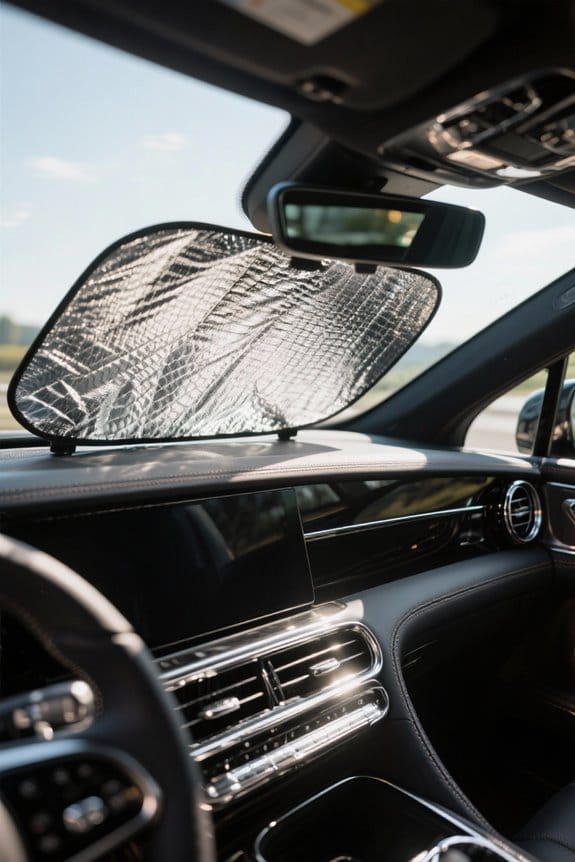
Because a sun shade is the car’s first line of defense against heat and UV, keeping it clean matters more than many drivers realize. Regular cleaning prevents dirt buildup that can blur vision and create hazards. A typical foldable car sun shade, about 27 x 58 inches and often $10–$25, works best when free of grime. Cleaning helps maintain reflectivity and avoid UV damage that fades dashboards and leather in months. It also stops allergens and bacteria from multiplying—important if someone sneezes in the back seat. Stubborn stains tell a story: spilled coffee, muddy shoes, a forgotten ice cream cup. Who wants that smell? Simple upkeep extends life, saves about $20–$40 per replacement cycle, and keeps the cabin pleasant for every drive. Choosing a custom-fit shade designed for your vehicle can improve coverage and insulation.
Choosing the Right Cleaning Method for Your Shade Type
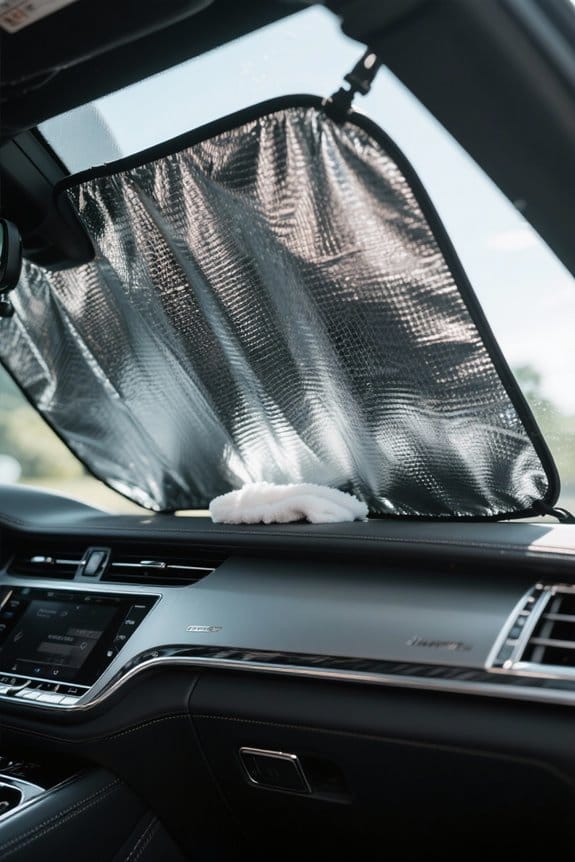
When choosing how to clean a sun shade, it helps to match the method to the material and style so the shade lasts longer and keeps working. For car sun shades that fold or roll, handwashing with mild soap and water is gentle and preserves reflective faces; think a teaspoon of detergent in a gallon of warm water. Static cling models need careful spot cleaning with a 1:3 vinegar-to-water mix to avoid losing stick—stain gone, cling kept. Custom-fit shades tolerate a gentle machine wash inside a mesh laundry bag; expect a $10 bag to protect edges. Metallic reflective shades respond best to a soft damp cloth and mild detergent—no scrubbing. Monthly routine cleaning keeps performance high and avoids costly replacements. Who wants a fried dashboard? Custom-fit covers also provide superior protection compared to universal options, so consider choosing a custom-fit design for best results.
Handwashing Steps for Fabric and Reflective Shades
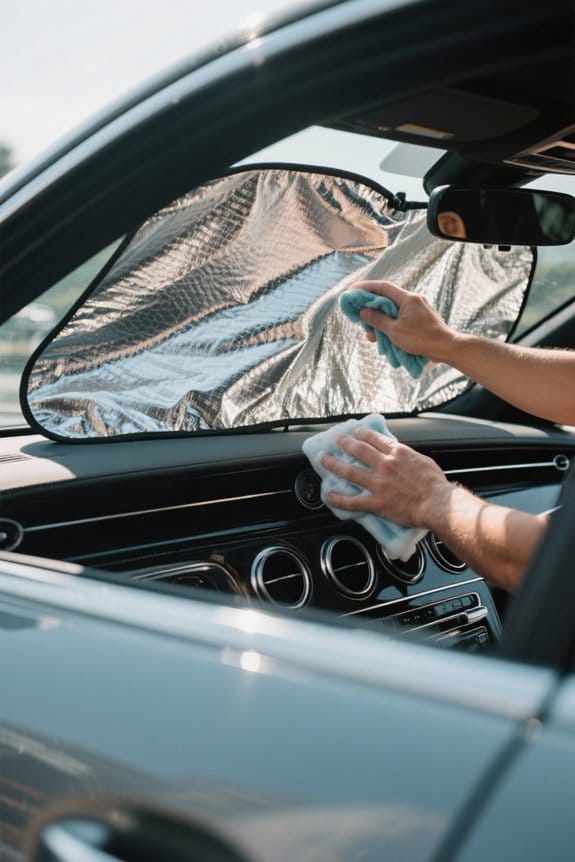
Lay the shade flat on a clean table or the garage floor and get ready to work. For handwashing, mix a mild soap with warm water — roughly one tablespoon per gallon — in a plastic tub or bucket. Remove surface dust first. Use a soft-bristled brush or a microfiber cloth to gently scrub stained areas; testers liken it to brushing a tired blanket. Rinse thoroughly with clean water to avoid soap residue that can discolor fabric. Don’t scrub hard; damage happens fast. Costs are minimal: mild detergent from $4, a soft brush about $6. Let the shade air dry fully before reinstalling to prevent mildew. Want a quick tip? Prop it upright for airflow. Simple, effective, and kind to the material. Consider choosing materials with UV400 protection when replacing shades to help block harmful UV rays.
How to Safely Machine Wash Fabric Sun Shades
Start by checking the manufacturer’s care label; it’s the rulebook for your sun shade and can save a ruined piece. Before machine washing, confirm the label allows machines. Shake off loose dirt; fold neatly to prevent creases. Slip the folded Car Sunshades into a mesh laundry bag — like a seatbelt for fabric. Use a gentle detergent, about one teaspoon per small load, and pick a delicate cycle with cool water. Avoid bleach and fabric softeners; they wreck coatings. Think of cleaning your car like giving it a spa day, not a carwash tornado. After the cycle, hang the shade to air dry completely. Dryers can shrink or warp the frame. Tester quote: “Worked like a charm — no tears, just fresh fabric.” Custom-fit sunshades often use double-layer construction to block up to 99% of harmful UV rays.
Targeted Spot Cleaning for Stains and Mildew
After a gentle machine wash, some stubborn spots may persist and need a focused touch. For targeted spot cleaning, mix equal parts white vinegar and water in a spray bottle — about 8 oz vinegar and 8 oz water works well and costs under $2. Spray the sun visor gently and let the solution sit for several minutes. Then scrub with a soft-bristled brush or cloth to lift mildew without fraying fabric. Rinse thoroughly with clean water to remove residue and odor. For deep mildew, use a mild detergent and warm water; avoid harsh chemicals that can strip coatings. Spot cleaning keeps the shade effective against UV and heat. Want proof? A tester noted stains faded within two treatments. Simple, cheap, and effective. For best long-term protection, also periodically use a reflective fabric-safe treatment to preserve UV protection and extend the shade’s lifespan.
Drying, Storage, and Preventing Mold Growth
Letting the sun shade dry completely is non-negotiable if one wants to avoid a moldy surprise later. After cleaning, place the shade flat or drape it over a chair for 6–12 hours. A 24-inch rule of thumb works: leave at least two feet of open space for air movement. For storage, choose a cool, dry closet or trunk compartment; avoid damp garages. Use a breathable bag (~$8 canvas pouch) rather than plastic. Do not fold or compress tightly. Creases trap moisture and accelerate mold growth. How often should you peek? Monthly checks for musty odors and dark spots suffice. Air circulation prevents spores from settling. Tester quote: “It felt like airing out a wet towel,” she joked. Act fast on any mold signs to protect the shade. Consider storing custom-fit sun shades in a cool, dry place to preserve their reflective layers and extend their lifespan.
Routine Inspection and When to Replace Your Sun Shade
Because sun shades sit in hot cars and get handled a lot, routine checks pay off. A quick inspection every month can spot cracks, tears, fading, or warped panels that cut effectiveness. Is the fit loose by more than 1–2 cm along the edges? That matters. If mold or mildew appears, replace immediately; a $15–$40 sun shade isn’t worth risking allergy or odor. Test UV blocking by comparing interior dashboard temperature before and after use; a 5–10°F drop is typical for a good shade. Stiffness, delamination, or persistent creases signal aging. Manufacturers often recommend replacing every 1–3 years. “Looks fine, but it’s tired,” a tester joked — a relatable nudge to swap in a fresh shade when performance slips. For best results, consider a custom-fit, multi-layer shield that offers superior UV protection and blocks up to 99% of harmful rays.
Frequently Asked Questions
How to Get Rid of Haze on Windshield?
Use windshield cleaning solutions and haze removal techniques: apply glass cleaner or vinegar-water, polish persistent spots with a compound, wipe with a microfiber cloth. Address common haze causes (oil, dirt) and follow preventive maintenance tips.
How to Clean a Dirty Sun Visor in a Car?
Want a quick fix? One should identify sun visor materials, dust and vacuum, apply mild detergent or vinegar for common stains, gently scrub, rinse and pat dry; cleaning techniques and maintenance tips prevent buildup and prolong lifespan.
What Is the Best Cleaner for Shade Sails?
The best cleaner for shade sails is a mildew-safe, non-bleach mold cleaner or diluted bleach for tough spots. He recommends shade sail maintenance using ideal cleaning solutions, outdoor fabric care, and eco friendly cleaners like vinegar.
Is Vinegar and Water Good to Clean Inside a Windshield?
Absolutely—vinegar and water works. He praises vinegar benefits enthusiastically as nearly miraculous for glass; combined with water alternatives and gentle cleaning solutions, it aids stain removal, best applied with a soft cloth and rinsed to avoid streaks.


