As an Amazon Associate, we earn from qualifying purchases. Some links on this site are affiliate links at no extra cost to you. Our recommendations are based on thorough research and editorial judgment.

Visibility Regulations: What’s Legal for Front Windshields?

Front windshields must be safety glass and keep the driver’s view clear. Chips over about 1/4 inch or damage in the 4–6 inch critical band near the top usually need repair or replacement. Tint above the AS‑1 line and VLT around 70%+ for front glass is common; tint meters and $100–$250 fines enforce rules. Repairs cost $60–$120; replacements run $150–$500. Want to know how to check compliance and options?
Key Takeaways
- Windshields must be safety glass and remain free of cracks or chips that obstruct the driver’s view.
- Damage larger than about 1/4 inch in the driver’s critical area (top 4–6 inches) is typically illegal.
- Front glass VLT requirements often require around 70% or higher visible light transmission.
- Non-reflective tint above the AS-1 line is usually allowed; front side VLT commonly must exceed 50%.
- Violations can trigger fines ($100–$250), failed inspections, or mandatory replacement for safety compliance.
Federal Standards for Windshield Visibility
You may be interested


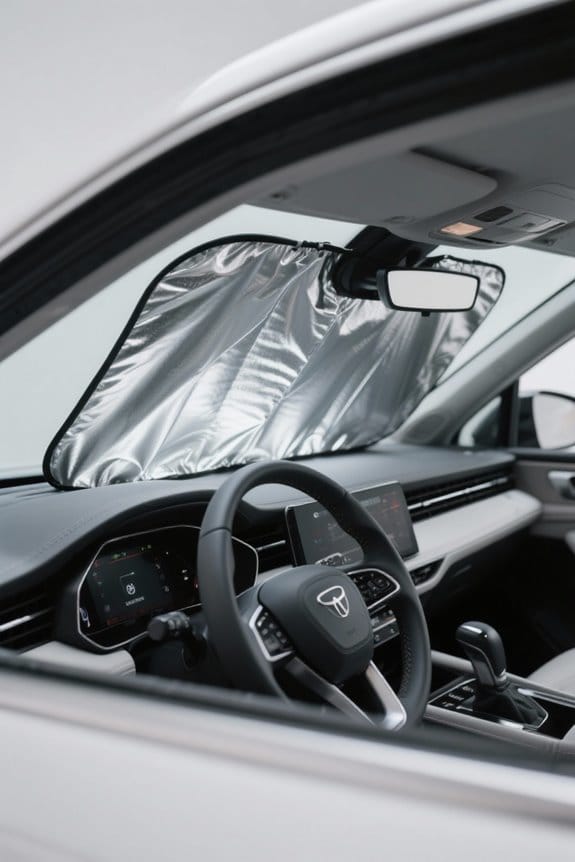
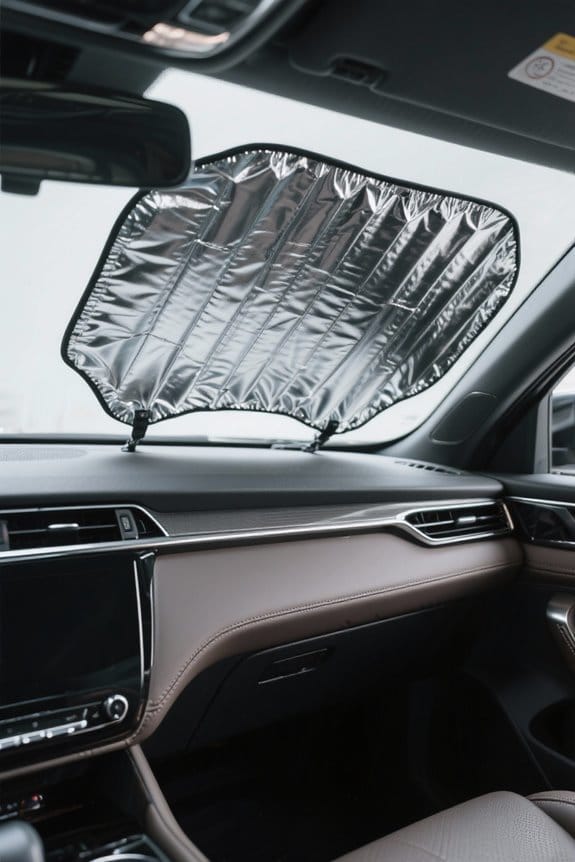
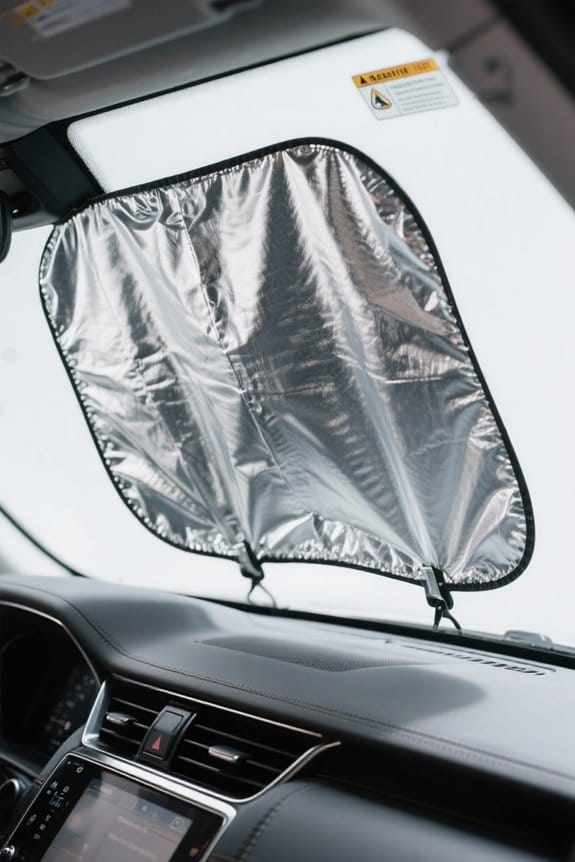
Although it may seem like a minor detail, federal rules require windshields to be made of safety glass and to keep the driver’s view clear. Federal laws set minimum safety standards to prevent shattering and protect occupants. Visibility must remain unobstructed; cracks or chips larger than a quarter in the driver’s line of sight are typically not acceptable and can trigger citations. Windshield tinting is limited when it impairs vision. Compliance improves road safety and helps airbags and sensors work correctly. Think of a windshield like a TV screen: dirt, damage, or dark film ruins the picture. A basic repair runs $60–$120; replacement often costs $200–$500. Tester: “You notice the difference immediately.” A properly fitted sunshade with double-layer construction can also help prevent interior heat damage and extend the life of your vehicle’s upholstery and electronics.
State-by-State Tint and Damage Limits

Federal rules set the baseline, but state laws write the fine print. Drivers learn that tinting laws vary like weather. Most states allow only non-reflective tint above the AS-1 line, about 4 to 6 inches from the top of the Front Windshield. Visible light transmission (VLT) for front side windows usually must exceed 50%. Back and rear windows are often looser. Cracks or chips larger than a quarter in the driver’s sightline are banned in most places to protect safety. Fines run $100–$250, and repeat offenses can mean failed inspections or harsher penalties. So check local laws before buying a $150 tint job. Who wants a ticket and a cloudy view? Many aftermarket sun shades offer UV protection and heat insulation that can help protect interiors when tinting is restricted.
Recommended Products
![Hard Top Canopy for John Deere 4x2 Gator [Made in the USA]](https://m.media-amazon.com/images/I/61e7gWctXFL._SL500_.jpg)
If you are looking for a way to stay out of the sun while operating your T Series Gator, look no further. This hard canopy for Work Series T Gator Utility vehicle is made of custom formed, UV resistant, heavy duty polyethylene. It has a customized Tubular supporting frame, which is powder coated for a rock hard finish.

[New Customization for Tesla Model Y Juniper Black Roof Interior]: The electric sunshade roof is designed specially for Model Y Juniper owner. In the process of driving daily, you can switch the sun and shift sunbathing curtain, especially in the summer of sunscreen , Electric sunshade roof is very simple and practical.

Odyssey '11-'14 (KA/KC/KL/KX)
Defining the Critical Area of the Windshield

One clear strip about 4 to 6 inches down from the top of the windshield is often treated as the “critical area” because it sits squarely in the driver’s primary line of sight. Regulators flag this zone for clear visibility. Damage larger than a quarter is usually illegal there. Small chips can refract light and distract a driver. Think of it like a smudge on your glasses during dusk. Inspect this patch during routine checks. Tinting on the windshield is restricted to preserve sight through front windows. Safety and legal rules aim to keep drivers line of sight unobstructed. A tester joked, “You wouldn’t wear sunglasses with one blind spot.” Prices for simple repairs run $50–$120, so why wait? High-quality sun visors made from reflective polyester can help reduce interior heat and UV exposure.
Visible Light Transmission (VLT) Explained
Because drivers need to see clearly in all conditions, Visible Light Transmission (VLT) measures how much light a windshield lets through, expressed as a percentage. VLT governs front windshields with most states requiring about 70% or higher. That keeps glare down and visibility up, especially at night or in rain. The AS-1 line marks where some tinting may begin. How dark is too dark? Excessive tint below that line can cut visibility drastically. Tinting laws vary, so check local legal limits before modifying glass. Law enforcement now often uses digital tint meters, about $200–$400, to test compliance roadside. A tester joked, “It’s like sunglasses for your car, but the cop holds the meter.” Practical, clear, and safety-first. Many Audi owners also use windshield sun shades designed for specific A7 models to protect interiors and help control cabin temperature.
The AS-1 Line and Permitted Sun Strips
After covering VLT percentages and why night visibility matters, attention shifts to the small band at the top of the windshield known as the AS-1 line. The AS-1 line sits about 5 to 6 inches down. States allow windshield tinting only above that line. Non-reflective tint strips typically must not exceed 4 to 6 inches deep. Why the fuss? Driver safety: clear sightlines matter in rain and at night. Many states ban tint below the AS-1 line entirely. Light transmission rules protect visibility and reduce tickets. Expect stickers, inspection flags, and fines if you ignore tinting laws. A tester joked, “It’s a sun visor, not sunglasses.” Typical strip kits run $20–$80, simple to fit in twenty minutes. Higher-quality shades made from reflective materials or layered fabrics can better block heat and UV protection.
Recommended Products

Most Realistic Paint-Replacement: VViViD Vinyls presents the newest evolution in vinyl wrap technology. Our Ultra Gloss range is the result of years of research and development, culminating in an almost mirror-like Gloss that is virtually indistinguishable from a factory paint job.

Acrylic-base adhesive is easy to apply and remove. Requires no previous wrapping experience!
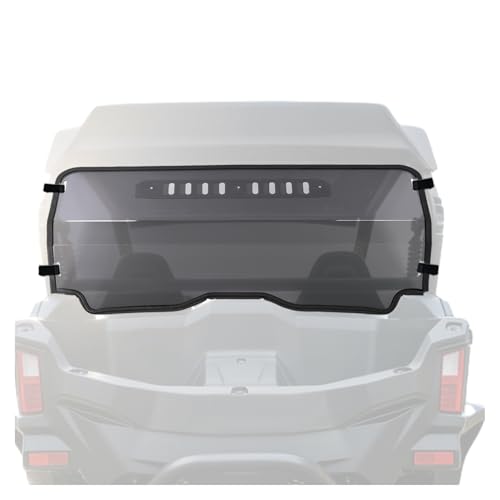
Fitment: The rear windshield compatible with Compatible with 2023 2024 2025 CFMOTO ZForce 950 Sport/Sport 4/Trail/800 Trail. Please check your model number before purchasing
Inspection, Enforcement, and New Enforcement Technologies
When officers need a quick answer, they now pull out compact digital tint meters that read visible light transmission in seconds. The handheld units, often under $300, give a percent reading. They make enforcement faster and fair. During inspection lanes, officials check windshield clarity, chips, and tinting against state laws. Visible defects over set sizes trigger automatic citations or repair orders. Drivers ask, “Is my car legal?” The meter settles debate. Compliance rates rise where checks are routine. Some officers joke the gadget is a “tint truth serum.” Yet the goal is safety: clear visibility for everyone. Regular inspections aim to catch problems early. Removing non-compliant film may be required to pass inspection. High-quality multi-layer shades can reduce cabin temperatures by 30-40F and block up to 99% of UV rays, making them an effective option for protection against sun damage.
Penalties for Illegal Tinting and Damaged Windshields
Offenders can expect a real sting for illegal tinting or a cracked windshield. Drivers face fines of $100–$250 for violating front tint laws, depending on state rules and severity. A failed inspection can force windshield replacement, which often costs $150–$400 for standard glass. Police can cite obstructive visibility from illegal tint or a damaged windshield larger than a quarter in the driver’s line of sight. Repeat offenses raise penalties and could affect your record. Need a fix? Think about costs and legal requirements before tinting. “It looked cool, but I paid double,” a tester joked, pointing to a $200 dealer bill. So, ask: is style worth a traffic ticket and extra repair expense? Many drivers also use sun shades to protect interiors and reduce cabin heat, and properly fitted custom-fit designs can improve protection and cooling.
Recommended Products

Designed and engineered to fit the following: 4-Door Models of 2015+ Kawasaki Mule Pro FXT | 2016+ Kawasaki Mule Pro DXT | Pro FXT Ranch Edition | Please Note: Does NOT fit Kawasaki Mule FXR or the 1000 Models

Designed and engineered to fit the following: 2017+ Polaris Ranger Midsize 500 | 2015+ Polaris Ranger Midsize 570 | 570 Crew | EV | ETX | (See Fitment to Ensure Fit) | Compatible with most aftermarket roofs and windshields.

See Clearly: Maintain visibility with a Polaris GENERAL Windshield Wiper Kit. Whether you approach heavy or light rain, fluffy or wet snow, or a surprise hit of mud, easily wipe away the elements from your windshield.
Safety Considerations: When Legal Damage Still Requires Repair
A few chips or a hairline crack might seem harmless at first, but small windshield damage can quickly become a driving hazard. Drivers learn this the hard way when a 1/4-inch nick spreads after a cold night. Even legally permissible blemishes can reduce visibility and refract light into distracting streaks. Safety compliance means prompt windshield repair, not waiting for a ticket. Damage in the critical eye-line — roughly a 6-inch by 3-inch band across the center — should be fixed immediately. Front side windows matter too, for peripheral sight. Repair kits run $20–$75; professional fixes average $50–$150. Who wants a broken view on a rainy commute? Regular inspections prevent surprises and keep vehicles within legal requirements for windshield safety. Many BRZ owners choose OEM sunshades to protect against sun damage and reduce interior heat buildup.
Recommended Products
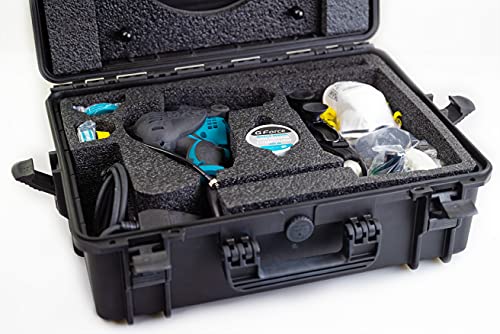
With the Gforce Max, distortion-free glass scratch removal is not only possible—it’s also simple and fast.

Our windshield removal tools package combines the efficiency of power tools and the precision of hand tools to offer a comprehensive and efficient solution specifically tailored for auto glass specialists. By integrating advanced power tools with versatile hand tools, we ensure optimal effectiveness and speed in windshield removal tasks, allowing professionals to complete auto glass replacement projects with utmost confidence and efficiency.

Double Bridge System - fix two rock chips, glass chips or small cracks in glass at the same time.
How to Verify Compliance Before Tinting or Repairing
Curious how to make sure a windshield is legal before tinting or repairing it? Car owners should first read state laws and DOT guidelines. Check Visible light transmission (VLT) limits—often 70% or higher for front glass. Inspect the AS-1 line location; windshield must keep repairs outside the driver’s sight path. Schedule a $40–$80 professional inspection to measure chip size; chips over about 1/4 inch need repair. Ask tint shops for a DOT-compliant certificate and a VLT reading meter printout. Consider medical exemptions paperwork if low VLT is needed. Benefits of window upgrades include glare reduction and UV protection. Want certainty? Call the DMV, bring photos, and get written compliance before any work starts. Also consider using a custom-fit shade to protect repaired areas and reduce interior heat.
Recommended Products

Advanced Two-Piece Design - Test windshield, rear, and side windows easily with the patented two-piece construction for comprehensive coverage.

Measures the transmittance of light in the safety testing of tinted windows and other materials; 3-Digit 999 count LCD

Assembled in USA
Frequently Asked Questions
Is 35% Too Dark for a Windshield?
Yes. He notes 35% is typically too dark for windshields; citing tint darkness levels, legal tint percentages, visibility challenges, safety concerns, police enforcement tactics, sun glare reduction, and aesthetic preferences in evaluating compliance.
What Is the Windshield Law in Kansas?
Is Kansas tinting permitted on the top five inches? He notes legal requirements: front side windows must exceed 35% VLT; windshield safety demands intact glass, visibility standards, installation guidelines, medical exemptions, and enforcement measures apply strictly.
What Is a Windshield Violation?
A windshield violation is damage or unlawful modification that impairs vision; it involves windshield tinting laws, common violations and aftermarket modifications, prompting enforcement penalties, tint removal options, state regulations and safety concerns.
Can You Legally Tint Your Windshield in AZ?
Yes. Using a 5% AS-1 upper strip is allowed; windshield tinting laws under Arizona vehicle regulations permit non-reflective upper tint. Discusses legal tint percentage, windshield safety standards, tinting exemptions Arizona, installation process explained, benefits of tinting.