As an Amazon Associate, we earn from qualifying purchases. Some links on this site are affiliate links at no extra cost to you. Our recommendations are based on thorough research and editorial judgment.

The Role of Sun Shades in Preventing Car Break-Ins

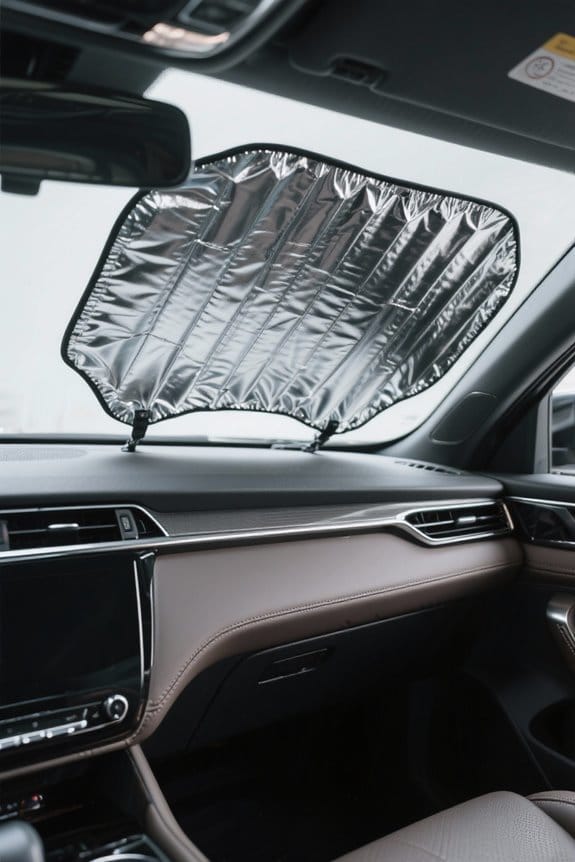
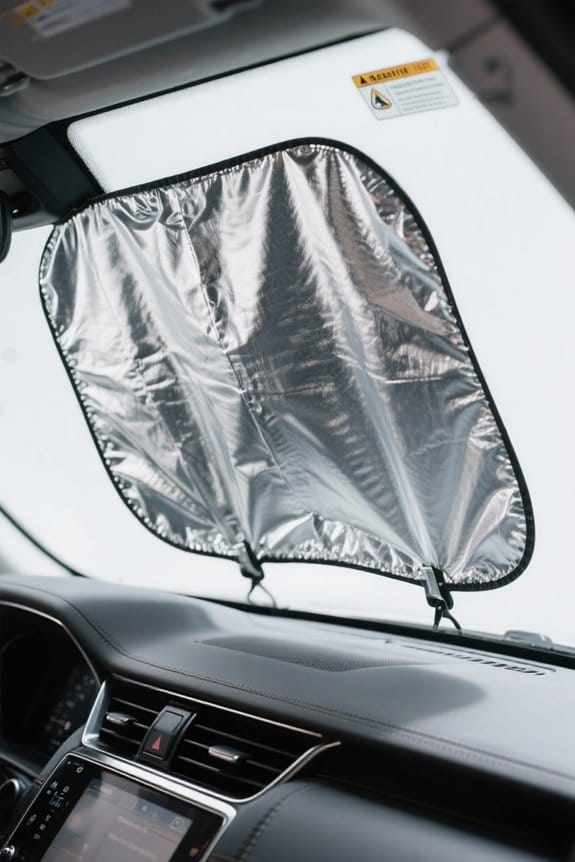
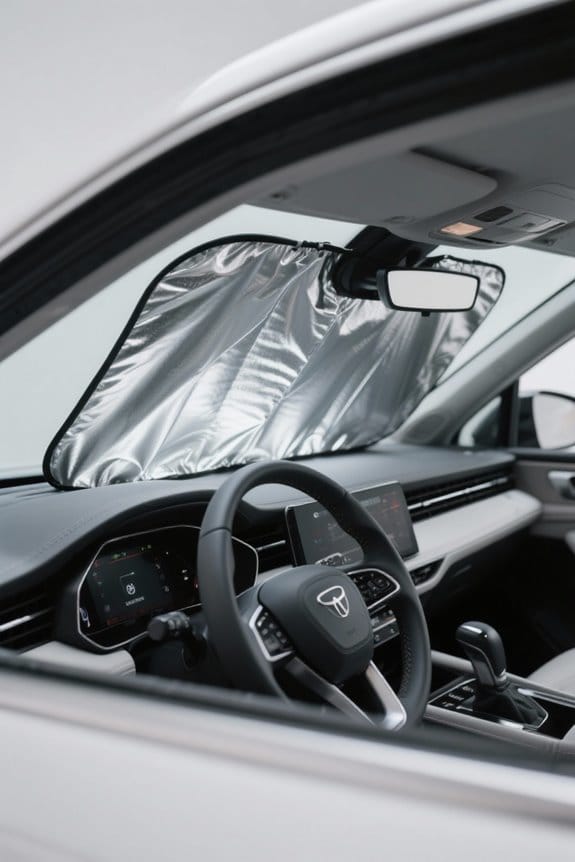
Sun shades cut windshield visibility by about 70–90%, turning a tempting interior into a reflective mirror that thieves often skip. They also block UV—some retractable models stop up to 99%—saving dashboards and seats from costly fading. Basic fold-up shades run $10–$20; custom-fit options cost $40–$80. Fit matters: tailored is better than floppy. Want fewer curious glances and fewer smashed windows? Keep a shade handy and learn the best ways to use one.
Key Takeaways
- Sun shades reduce windshield visibility by 70–90%, making it harder for thieves to spot valuables inside.
- Visible sun shades discourage opportunistic break-ins by signaling limited interior visibility and potential lack of targets.
- Properly fitted shades with high UV-blocking materials also protect upholstery, preserving resale value and reducing replacement incentives.
- Use sun shades as one layer of security alongside alarms, steering locks, and parking in well-lit areas.
- Regularly inspect and correctly position shades to ensure full coverage and maximum theft-deterrent effectiveness.
How Sun Shades Reduce Visibility and Deter Thieves

You may be interested


A simple sun shade can make a car look like a closed book. Sun shades cut visibility by 70% to 90% depending on material and fit, so thieves can’t easily spot valuable items. Think of a dashboard that reads “nothing here” from three feet away. A basic reflective fold-up shade costs about $10–$20 and fits most cars; custom covers run $40–$80 with foam edges for snug fit. This low-cost deterrent boosts other security precautions, too. Would you risk a smash for an unseen phone? Observers report fewer attempts on shaded vehicles. One tester joked, “It’s like putting a curtain on your glove box.” Clear data and simple use make sun shades a practical step in preventing break-ins. Sun shades can also lower cabin temperatures by up to 40F, improving comfort and protection for interior surfaces temperature control.
Protecting Interior Materials From UV Damage

Sun damage is sneaky, and it eats at upholstery over time. A good sunshade creates a visual barrier and blocks UV rays that fade fabric, leather, and vinyl. Owners see cracked dashboards and brittle seats after years of sun exposure. A high-quality retractable sunshade can cut radiation by up to 99% and costs roughly $15–$40, saving hundreds in repairs. It shields interior components like seats, trim, and electronics, preserving the vehicle’s interior aesthetic appeal and resale value. Who wants a sun-bleached steering wheel? Testers joke it looks like a summer road map. Treat the shade as a critical barrier. It’s simple prevention: small purchase, big long-term savings, and less heartbreak at trade-in time. A custom-fit sun shade can also ensure full windshield coverage, maximizing protection and cooling efficiency.
Practical Tips for Choosing and Using Sun Shades

Because a proper sunshade fits like a tailored shirt, it does most of the security work before anyone even looks inside. Buyers should choose sunshades that match vehicle make and model for full coverage. A well-fitted sunshade creates a visual barrier and deters casual thieves. Look for high-quality materials with clear UV protection specifications — think 50+ UPF fabric, reflective foil layers, or 5–7 mm foam cores. Prefer removable sun shades with easy deployment mechanisms; retractable or roll-up designs often cost $15–$40 and store neatly in trunks. How long will one last? Inspect monthly and replace at first fray to keep maintaining effectiveness. Testers joke that a good shade is like blindfolding nosy neighbors. Practical, quick, and affordable — that’s the point. Reflective fabrics and multi-layer construction can significantly improve heat reduction and durability, especially when using custom-fit designs for specific vehicle models.
Additional Security Measures to Pair With Sun Shades
Having the right-fit shade is only step one; pairing it with other measures completes the job. Pair sun shades with a $50-$200 aftermarket car alarm for layered security. Park in well-lit, busy spots—within 30 feet of lights—so thieves hesitate. Hide valuable items in the trunk before parking; a small duffel box works and costs under $30. Visibility reduction plus audible alarm cuts opportunistic theft risk sharply. Conduct quick scene checks: scan nearby people and cars for unusual behavior. Ask neighbors to watch your block; community vigilance amplifies deterrence. Want an extra nudge? Use a steering wheel lock (about $40) as visible theater. A tester laughed: “It’s like adding a dog you never feed.” Using a properly fitted sunshade also helps maintain interior privacy and reduces temptation for break-ins.
What to Do After a Break-In or Vandalism
Call the police right away and stay calm. Officers will take a report and ask for time, location, and any suspect details. Then document damage with photos—close-ups and wide shots—and list stolen items with estimated values to speed the insurance claim. Lock doors and close windows; driveable cars can go to a shop for a $75–$150 inspection. Notify the insurer, give the police report number, and expect a 7–14 day initial response. Reevaluate security measures: add sun shades ($10–$40) to cut visibility, and consider protective accessories like a steering-wheel lock ($20–$60). Who knew a $15 sun shade could help? It’s practical prevention after the shock, and sensible steps make recovery faster and less painful. Consider investing in vehicle-specific sun shades that block up to 99% of UV rays for both protection and cooling benefits vehicle-specific fit.
Frequently Asked Questions
Do Sunshades for Cars Actually Work?
Like a silent guard, he affirms sun shades effectiveness: they offer car interior protection, a theft deterrent strategy, UV ray prevention, heat reduction benefits, privacy enhancement features, and aesthetic appeal considerations, collectively reducing break-in temptation.
What Is the 30-60-90 Rule for Cars?
The 30-60-90 rule schedules maintenance: monthly fluid checks, bi-monthly tire inspections, and quarterly brake, light, and critical component reviews. It complements car security measures like window tinting, alarm systems, lock mechanisms, anti theft devices, vehicle tracking, and parking strategies.
How to Deter Car Window Break-Ins?
Forthrightly: one must armor the vehicle like a fortress—upgrade car security, apply window tinting, install robust security features, employ parking strategies, reduce visibility of valuable items, and combine theft prevention tactics to thwart window break-ins.
What Is the Hardest Car for Thieves to Steal?
The hardest cars for thieves to steal are typically models like the Honda Accord and Toyota Camry, due to robust anti theft technologies, vehicle tracking, advanced security features, effective car alarms, lower appeal as popular targets, and improved personal safety.