As an Amazon Associate, we earn from qualifying purchases. Some links on this site are affiliate links at no extra cost to you. Our recommendations are based on thorough research and editorial judgment.


Do SUVs Need Different Sun Shades Than Sedans?

SUVs do need different sun shades than sedans. Their windows are taller and squarer, so pop-ups sized about 24″x40″ for sedans often leave gaps. Think 30″x60″ SUV panels or custom-fit reflective polyester (260T) for $30–$70. Universal $10–$25 shades can flap at highway speeds; retractable or magnetic $25–$60 models seal better. Want cooler seats and less UV fade? Measure your windshield (56–66″ wide) and pick fit over bargain—more tips follow.
Key Takeaways
- Yes — SUVs generally need larger sunshades because their windows are taller and wider than sedan windows.
- Standard SUV shades are about 30″x60″, compared with typical sedan shades around 24″x40″.
- Universal shades often leave gaps on angled or curved SUV windows, reducing effectiveness.
- Custom or retractable SUV-fit shades (priced ~$25–$70) seal better and block more heat and UV.
- Proper measurements and secure attachments (suction cups, straps, magnets) ensure full coverage and performance.
Why SUV Window Dimensions Change Sunshade Needs
You may be interested


Because SUVs sit higher and show more glass, their sunshade needs shift noticeably from sedan norms. The taller windows demand larger covers. A 30″x60″ sunshade makes more sense than a typical 24″x40″ sedan model. Many buyers choose custom-fit options costing $25–$60 for proper coverage. Angled rear glass can thwart generic fit. How will you block heat that climbs toward the roof? Expect interior temps to rise 10–20°F faster in summer without correct shielding. Extra rear passenger windows often need separate shades or a multipanel kit priced around $40. Testers joke that one-size-fits-all is the kingdom of square pegs. Practical shoppers look for reflective material, rigid frames, and Velcro tabs to secure a snug, reliable seal. EcoNour and similar models often offer custom-fit options that block over 95% of UV rays.
How Window Shape and Angle Affect Coverage

While SUVs sit taller and show more glass, window shape and angle change everything about shade fit and performance. Taller, squarer panes often need sun shades 30–50% wider than sedan models. Angled rear quarter glass creates gaps with flat pop-up shades. Universal shades priced $10–$25 can fail to seal curved surfaces. Retractable sunshades ($25–$60) adapt better to height and are easier to reach. Testers joked that a sedan shade on an SUV looks like a bandage on a forearm — it covers, but misses the edges. Ask: want full coverage or quick sun blocking? If rear side windows face west, expect more heat and opt for tailored shades. Practical measurements matter. High-quality reflective fabrics can block up to 99% of UV rays, making reflective materials a key consideration when choosing shades.
Comparing Materials: What Works Best in Larger Vehicles
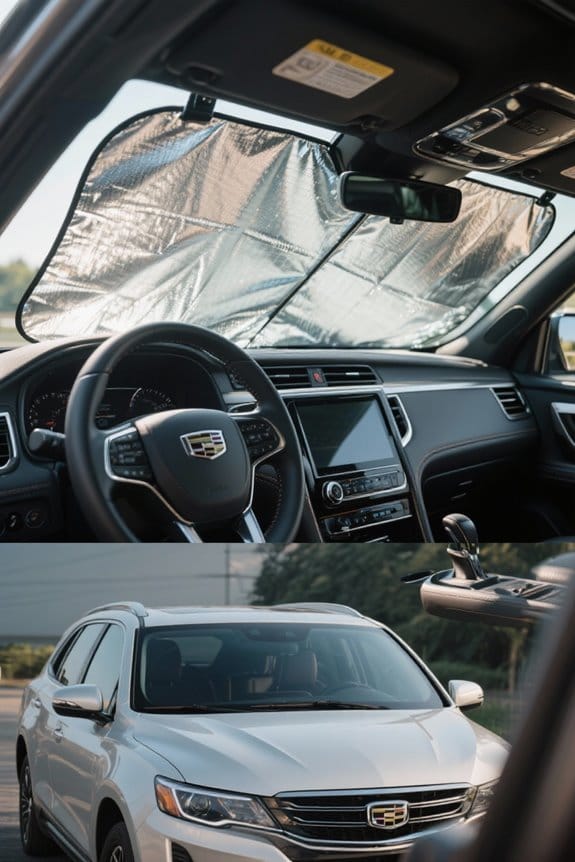
If an SUV’s glass is a billboard, the material is the sunscreen. Readers learn that reflective polyester or mylar works best on larger panes, cutting UV and redirecting heat by up to 60%. A typical mylar sun shade runs $15–$35 and covers 40–60 square inches more than sedan models. Fabric shades cost $8–$20, but they block less heat and feel thin on big windows. Magnetic sunshades stick firmly, surviving highway gusts and off-road bumps; expect prices near $25–$50. Roll-up or retractable units save trunk space and deploy in seconds. Which to pick? Think durability, fit, and budget. One tester joked, “Feels like instant AC.” Practical choices win: reflective, reinforced, and sized for the glass. Many CR-V owners prefer 260T reflective polyester for its durability and high UV-blocking performance.
Custom-Fit vs. Universal Sunshades for SUVs
After covering materials that block heat and reflect sunlight, the next choice is fit. SUVs have taller, steeper windshields—often 10–20% larger than sedans—so a custom sunshade sized to millimeters matters. A custom sunshade that costs $30–$70 and matches contours seals edges, cuts glare, and lowers cabin heat by noticeable degrees. Universal shades try to stretch; they leave gaps and wobble. Who wants a sunshade flapping like a bad hat? Testers say a snug fit feels reassuring. Practical buyers find measured width and height numbers useful before purchase. Want cooler seats and less UV fade? Pick a tailored option. It costs more, yes, but delivers better coverage and real comfort for bigger interiors. Many Chevy Colorado owners prefer vehicle-specific designs for the best fit and protection.
Climate-Based Choices for SUV Owners
How hot does an SUV need to get before a sunshade becomes vital? In arid zones exceeding 90°F, SUV owners often choose larger, custom-fit sun shades priced $25–$70 to guarantee full sun protection for a big windshield and tall dash. Magnetic shades, about 18–24 inches taller than sedan models, can cut interior temperatures by 15–25°F and guard against UV fade. Reflective fabrics with a 90%+ reflectivity rating redirect heat like a mirror, keeping seats cooler for kids and dogs. Side-window coverage is useful at high seating heights to reduce glare while driving. Which shade fits? Measure windshield width and height. Tester note: “It’s like installing a mini sunscreen for your car,” one reviewer joked. Many SUV owners prefer custom-fit designs because materials like 210T and 250T polyester provide better durability and heat resistance.
Installation and Storage Tips for Bigger Sunshades
A few careful steps make installing and storing a big SUV sunshade much less fiddly than it looks. Measure the windshield first: typical SUV widths run 56–66 inches, so note height too. Secure attachment matters. Use strong suction cups, straps, or clamps to prevent shifting on hot, windy days. One tester joked, “It held like a stubborn lid.” Foldability helps for storage. Choose shades that fold to 24–30 inches or roll up to 6–8 inches in diameter for glovebox or trunk stowage. Clean the sunshade monthly; dust reduces reflectivity and can mean earlier replacement. Consider a dedicated storage bag—about $10–$20—for protection and quick access. Simple care preserves function and keeps the interior cooler, plain and practical. Many SUV owners prefer custom-fit shades because they eliminate gaps and maximize UV protection.
Creative Workarounds When Perfect Fit Isn’t Available
When the perfect sunshade isn’t on hand, drivers can still jury-rig smart, safe solutions that keep interiors cool and tidy. One approach flips a sun shield upside down to block wind and stop things sliding under seats. Try a 27″x54″ shield in an SUV; it often covers more glass than a 24″x48″ sedan model. Household items—reflective bubble wrap, a lightweight blanket, or cardboard—work as temporary sun shields for $5–$20. Community forums yield odd but useful fixes. “I used pool noodle clips,” one tester joked, and it kept glare out for a week. Want better coverage? Choose slightly larger sizes or combine two shields. Practical, cheap, and reversible. Who knew resourcefulness could look this tidy? Newer RAV4-specific shades can block up to 99% of UV rays and greatly reduce interior temperatures.
Top SUV-Friendly Sunshade Brands and Models
Those jury-rigged fixes are useful, but many SUV owners prefer purpose-built shades for bigger glass and hotter summers. Pigenius makes customizable sunshades for SUVs, fitting windshields up to 70 inches wide and costing about $35–$60. EcoNour offers oversized reflective panels, roughly 65×30 inches, priced near $25, and testers call them “a cool blanket for your dash.” Magnetic shades stick fast to large rear and side glass; expect $20–$45 and easy one-handed removal. Retractable units, often $40–$80, roll away for storage and give adjustable coverage on tall windshields. Which is the Best Car Sunshades pick? It depends on size and ease. If you want maximum coverage, choose oversize or custom-fit. If you want convenience, try retractable or magnetic. For long-term protection and UV blocking, consider a custom-fit sunshade designed for specific SUV models.
Frequently Asked Questions
Are All Car Sunshades the Same?
No; Sunshade Variability means car sunshades differ in size, shape, material, and fit. Manufacturers and consumers note custom-fit versus universal options, diverse reflective properties, and model-specific designs that affect coverage, UV blocking, and heat reduction.
Do Car Sunshades Make a Difference?
Yes. It observes measurable Heat Reduction: sunshades lower interior and dashboard temperatures, limit UV damage, and improve comfort; custom-fit designs outperform generic options, with material and coverage determining overall effectiveness and longevity.
Why Do People Prefer SUVS Over Sedans?
They lean toward “roomier companions,” favoring SUV Popularity for spacious interiors, elevated visibility, perceived safety, towing and terrain versatility, and all‑weather capability — practical and status signals that align with family needs and adventurous lifestyles.
Which Type of Sunshade Is Best for a Car?
Reflective Sunshade Materials typically perform best for a car, as metallic or multi-layer reflective fabrics block UV and heat efficiently; choice depends on window size, fit, and convenience, with custom-fit options offering superior coverage.

